

Sinus lift and bone graft are preparatory procedures used when bone height or width is insufficient in the area where an implant will be placed. They often come up before implants in people whose tooth loss was a long time ago, who have worn a removable denture for a long time or who have lost bone because of gum disease. A patient who sees a note saying "insufficient bone" on their X-ray usually first asks what these procedures are and how much they delay the implant.
Why does bone shrink, and where does the sinus come in?
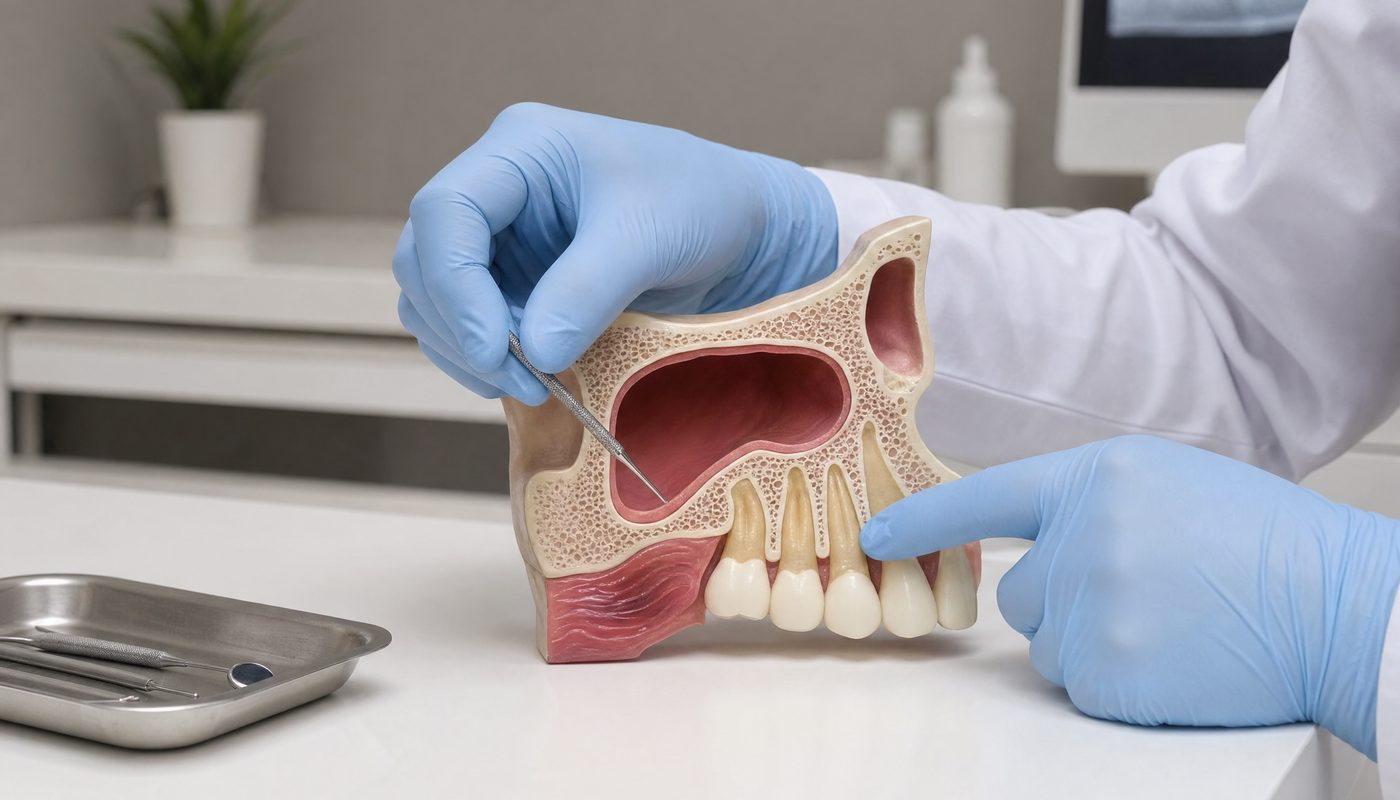
After a tooth is extracted, the bone in that area no longer receives chewing stimulus, so over time it becomes thinner and lower. In the back of the upper jaw there is another dimension to this: just above the molars lies an air cavity called the maxillary sinus. As teeth are lost, the floor of the sinus sags downward, and there may not be enough thickness between the bone and the sinus to carry the implant.
A sinus lift is the careful lifting of the membrane at the floor of the sinus and placing bone graft in the space that opens up. This creates enough bone height for the implant. A bone graft is a more general term; it can be applied anywhere bone is missing, in the lower or upper jaw, in the front or the back. The graft material can come from the patient's own bone, from processed human or animal-derived bone, or from synthetic material. Which material is chosen depends on the size of the deficiency and the physician's preference.
Who is it suitable for?
- People for whom an implant is planned in the back of the upper jaw and whose distance between the sinus and the bone is insufficient
- Patients whose tooth loss was a long time ago and whose bone loss has progressed
- People who have worn a removable denture for a long time
- Patients who have lost bone because of advanced gum disease but whose disease has been brought under control
- Cases in which the bone is to be protected during tooth extraction (socket preservation)
- People whose general health is suitable for surgery
An active sinus infection, uncontrolled sinusitis, heavy smoking, uncontrolled diabetes and some bone medications can delay the procedure or change the plan. An ear, nose and throat (ENT) examination can be a prerequisite for some patients.
Treatment process
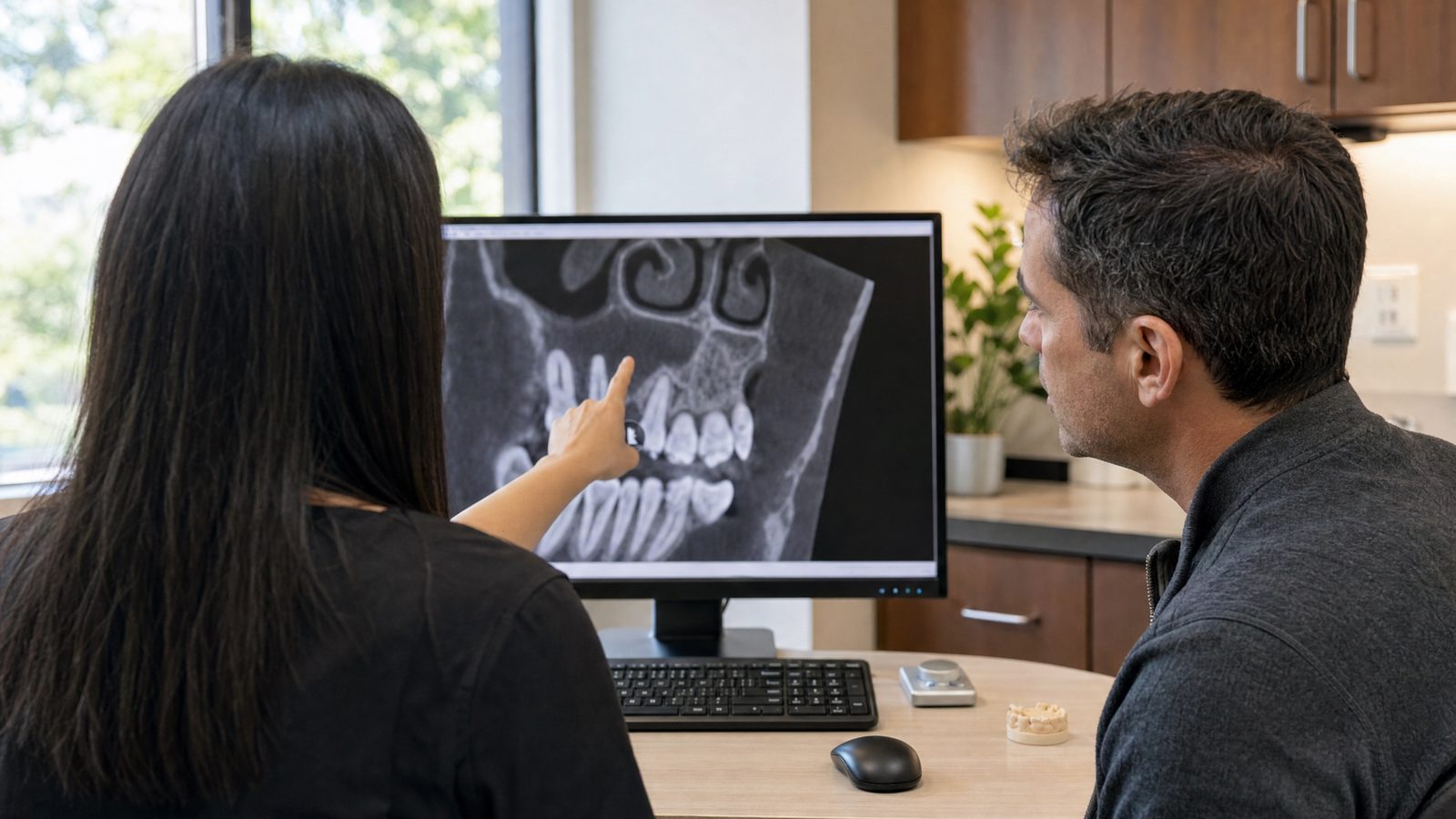
Measurement with a CT scan
Bone height and width, the position of the sinus floor and sinus health are assessed with a three-dimensional CT scan. The type of graft and whether the implants can be placed in the same session are determined here. An existing CT scan can be reviewed remotely.Choosing the method
If bone height is relatively sufficient, a closed (internal) sinus lift is preferred; the sinus floor is lifted slightly through the implant socket, and the implant is often placed in the same session. If there is very little bone, an open (lateral) sinus lift is performed; a small window is opened in the side wall of the sinus, the membrane is lifted and the graft is placed.Surgical procedure
The procedure is performed under local anesthesia; sedation can be arranged if requested. The graft is placed, a protective membrane is added if needed and sutures are placed. If bone width is lacking, a graft is applied to the side surface in the same way.Healing and bone formation
It usually takes four to nine months for the graft to mature and turn into the patient's own bone. With the closed method, and when the implant is placed in the same session, this wait is combined with implant healing.Implant and prosthesis
Once bone formation is complete, the implant is placed (if it was not placed in the same session), and after bonding the prosthesis stage begins.If the sinus lift or graft can be done in the same session as the implant, the total number of trips does not change; if it is planned as a separate stage, an additional trip is needed for the implant. A stay of a few days is usually enough for each surgical trip; reviewing the CT scan and preparing the written plan are done remotely. The exact duration varies according to the physician's plan.
Healing and what to watch for
Swelling, bruising, a mild nosebleed and a feeling of pressure can be expected in the first days. After a sinus lift, for a few weeks it is important not to blow your nose, to keep your mouth open when sneezing, not to drink through a straw, and to avoid pressure changes such as air travel and diving for as long as the physician recommends. Smoking directly and negatively affects whether the graft takes.
Possible risks include tearing of the sinus membrane, infection, loss of the graft or insufficient bone formation, sinusitis, and, rarely, graft particles escaping into the sinus. A membrane tear can often be repaired during the procedure; in some cases the procedure is postponed. Most of these risks can be reduced through regular checkups and following the instructions, but they cannot be eliminated completely.
Is a sinus lift always necessary?
No. Short implants, angled implants or approaches such as All-on-4 can make a sinus lift unnecessary for some patients. These alternatives can mean less surgery and a shorter time, but they are not suitable in every case. On the other hand, a graft can allow more standard implant lengths and a wider range of prosthesis options in the long term. Which path is chosen is determined by weighing the CT measurements, the patient's schedule and general health together.
You can get a free initial assessment by sending your panoramic X-ray or your CT scan; a specialist physician reviews it and a plan, including whether a graft is needed, is sent to you in writing. This article is for general information only; the exact diagnosis and treatment plan are determined through an examination by a specialist physician.