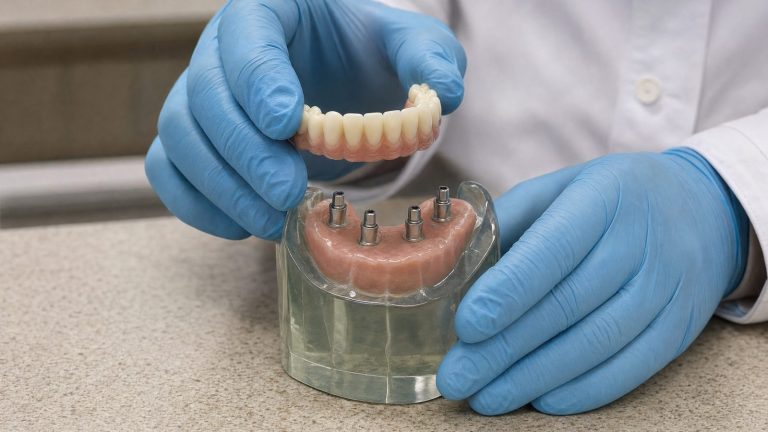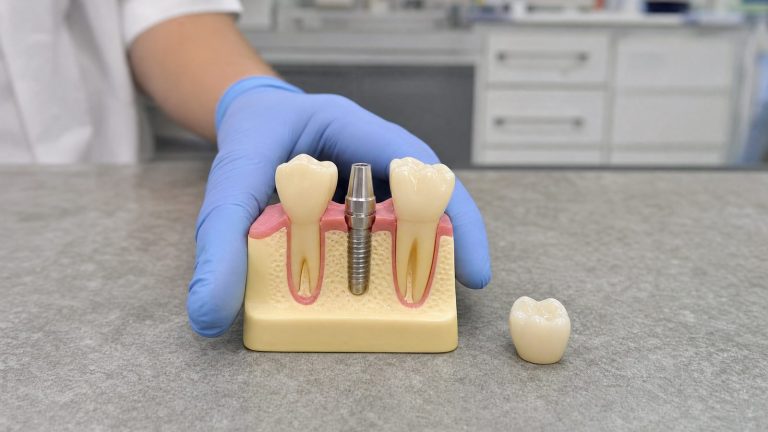


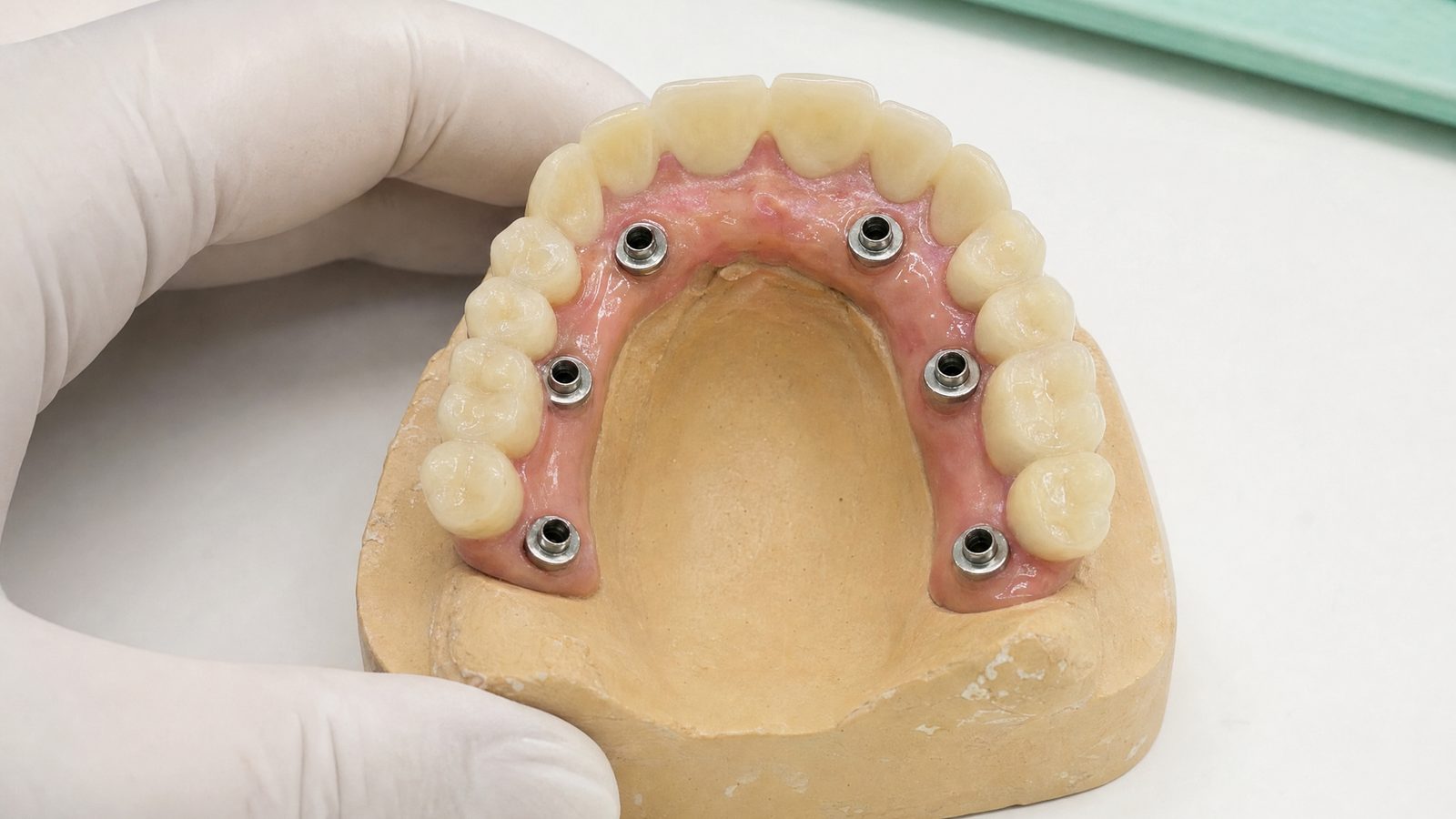
All-on-6 is an approach in which six implants are placed in a completely toothless jaw and a single-piece fixed prosthesis is fitted on top. It comes up for people who have lost all their teeth, are not happy with a removable denture and want to spread the chewing load across more implants. Its name is often confused with All-on-4; the logic of the two methods is similar, but the points where they differ are decisive for the plan.
What is All-on-6 and how does it work?
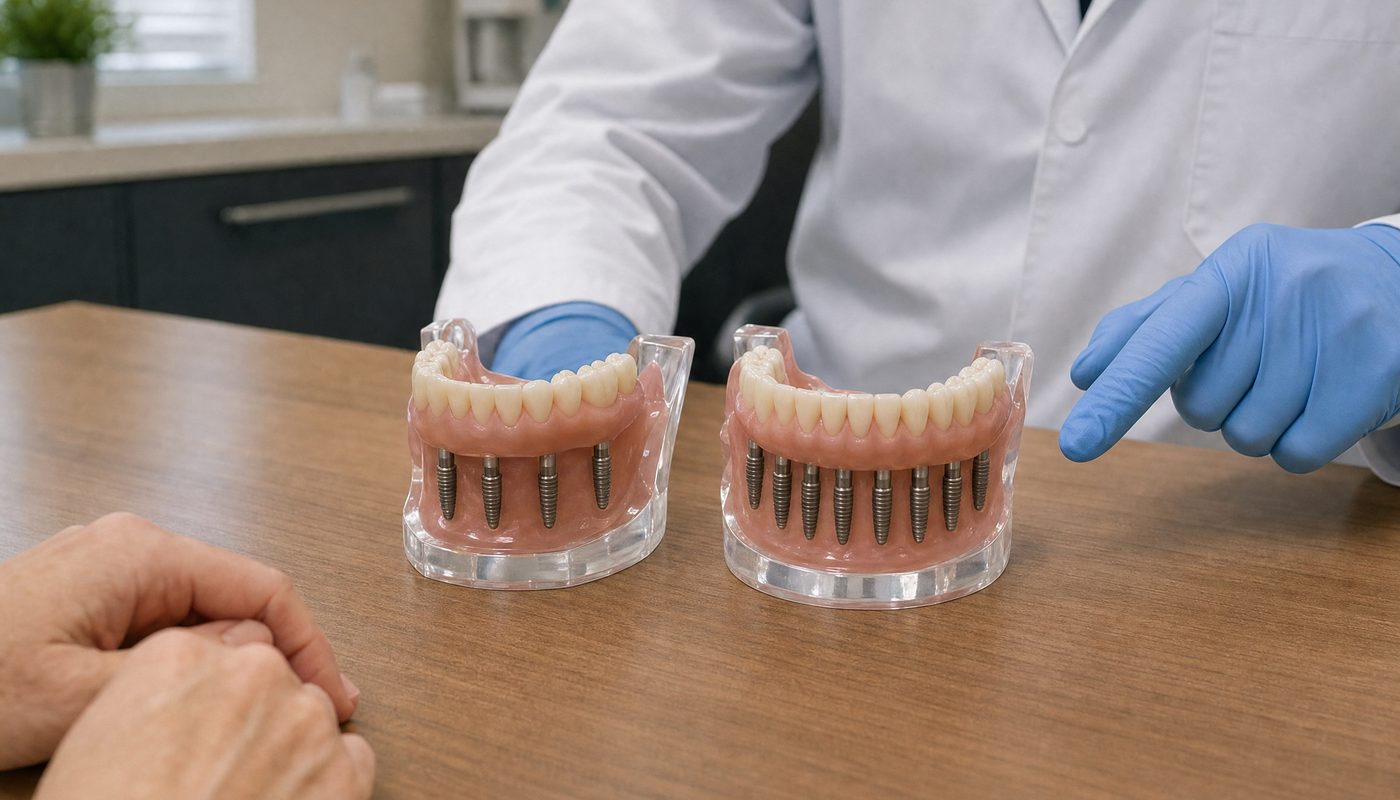
In this method the implants are spread over a wider area along the jawbone. Usually straight implants are placed in the front, and straight or angled implants in the back depending on the condition of the bone. Six support points shorten the rear extension of the prosthesis and help distribute chewing force more evenly.
The prosthesis is attached to the implants with screws and cannot be removed by the patient. A temporary prosthesis is fitted first, and the final prosthesis once bonding with the bone is complete. The final prosthesis can be made of zirconia, acrylic or a metal-supported hybrid structure; the choice is made together with the physician.
Who is it suitable for?
- People who have no teeth left in the upper or lower jaw, or whose remaining teeth cannot be saved
- People whose jawbone volume is enough to place six implants
- Patients with high chewing force who clench or grind their teeth
- People with relatively low bone quality for whom a wide fixed prosthesis is planned in the upper jaw
- Adults whose general health is suitable for surgery and whose systemic conditions are under control
If bone volume is insufficient, a sinus lift or bone graft may be needed first for six implants. In that case the physician compares a plan such as All-on-4, which reduces grafting, with All-on-6 with a graft.
Treatment process
Imaging and planning
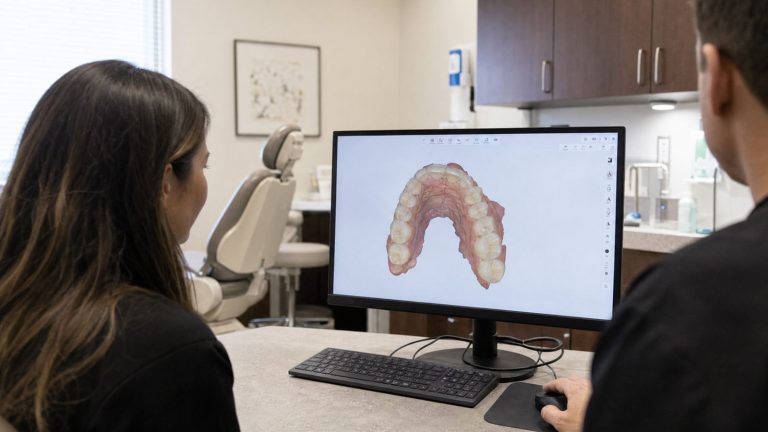
Bone height and width and the positions of the sinuses and nerves are measured with a panoramic X-ray and a three-dimensional CT scan. The number and positions of the implants and the prosthesis design are determined from these data. Existing X-rays can be reviewed remotely; the exact plan is settled at the in-person examination.Preparatory surgery if needed
If the bone is insufficient, a sinus lift or a bone graft is performed. This can be done in the same session as the implants or at a separate stage; if done separately, a wait of a few months is usually needed for healing.Placing the implants
Teeth that cannot be saved are extracted and six implants are placed. The procedure is done under local anesthesia; the sedation option can be discussed with the physician. If initial stability is sufficient, a temporary fixed prosthesis is fitted within a few days; if not, a removable temporary denture may be recommended.Bonding period
The implants usually take three to six months to bond with the bone; this period may be longer if a graft has been done. During this period, eating soft foods and following the hygiene routine set by the physician are important.Final prosthesis
New impressions are taken, a try-in is done and the final prosthesis is screwed on. The bite, speech and aesthetics are checked one last time.Two trips are usually planned for All-on-6: the first involves a stay of close to a week for surgery and the temporary prosthesis, and after bonding a second visit of a few days is needed for the final prosthesis. If the graft is to be done at a separate stage, a third trip may be added; reviewing X-rays and preparing the written plan are done remotely. The exact duration varies according to the physician's plan.
Healing and what to watch for
Swelling, bruising and mild bleeding are expected in the first days after surgery. Cold compresses, the prescribed medication and taking care of the stitches make healing easier. Smoking is one of the important factors that negatively affect bonding; quitting during healing is recommended.
Possible risks include failure of an implant to bond with the bone, infection, problems in the sinus area, temporary changes in sensation in the lower jaw, and wear or breakage of the prosthesis over time. Having six implants can make it easier to support the prosthesis if one implant is lost; even so, regular checkups and professional cleaning are essential.
Differences between All-on-4 and All-on-6
The main difference is the number of implants and the bone requirement. All-on-4 aims to use the existing bone with angled rear implants and often does not require a graft; for this reason it stands out for patients with advanced bone loss and when a shorter treatment time is wanted. All-on-6, on the other hand, requires more bone, but it spreads the load over more points and makes it possible to build a longer prosthesis in the back.
Which method is suitable is less a matter of preference than a result of bone measurements. It is also possible to plan All-on-6 for the upper jaw and All-on-4 for the lower jaw in the same patient. The maintenance requirements, prosthesis materials and healing process of the two methods are largely similar.
You can get a free initial assessment by sending your panoramic X-ray or your existing medical reports; a specialist physician reviews your X-rays, and the suitable method and plan are sent to you in writing. This article is for general information only; the exact diagnosis and treatment plan are determined through an examination by a specialist physician.