

Digital smile design is the process of planning a new smile on a computer using facial photos, short video recordings and an intraoral scan, and showing it to the patient before it is applied. It is a planning tool for people who are not happy with the shape, color or alignment of their teeth and want to see the result in advance. It is not a treatment in itself; it is the way treatments such as veneers, crowns, orthodontics or implants are planned.
What is digital smile design and what does it change?
In the traditional approach, the physician designed the shape of the new teeth on a plaster model, and the patient saw the result only once the teeth were made. In the digital approach, facial proportions, the lip line, the amount of tooth visible when smiling and the midline of the face are analyzed on photos and video. Tooth lengths and shapes are drawn according to these references.
The design does not stay only on the screen. A temporary material is applied over the teeth using a model produced with a three-dimensional printer; this is called a trial smile (mock-up). The patient sees the new smile in the mirror, speaks, has photos taken and can ask for changes. The final treatment begins only after this stage is approved.
The important point here is that digital design does not replace the physician. The software produces a suggestion; the health of the teeth, the bite relationship and the condition of the gums are evaluated by the physician to make the design workable.
Who is it suitable for?
- People who are not happy with the shape, length or alignment of their teeth and are considering an aesthetic change
- Those planning veneers, zirconia or E-max crowns who want to see the result in advance
- Patients with worn, broken or discolored teeth
- People whose gums show too much when smiling or whose gum level is uneven
- Complex cases in which more than one treatment (orthodontics, implants, crowns) is planned together
Active gum disease, untreated decay and an uncontrolled teeth-clenching habit should be treated first. In people whose jaw growth is not complete, irreversible aesthetic procedures are usually postponed.
Treatment process
Photos, video and scan
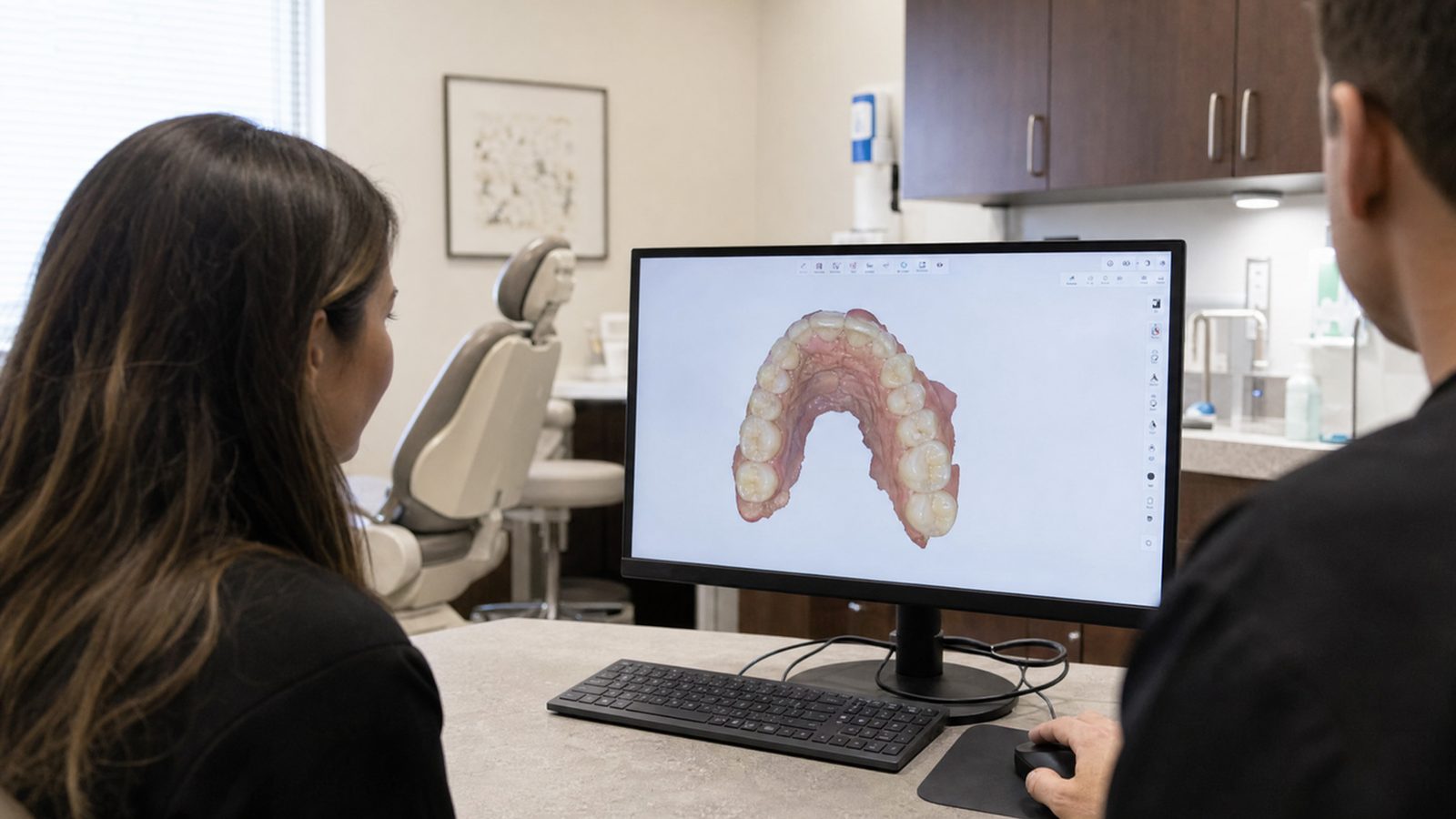
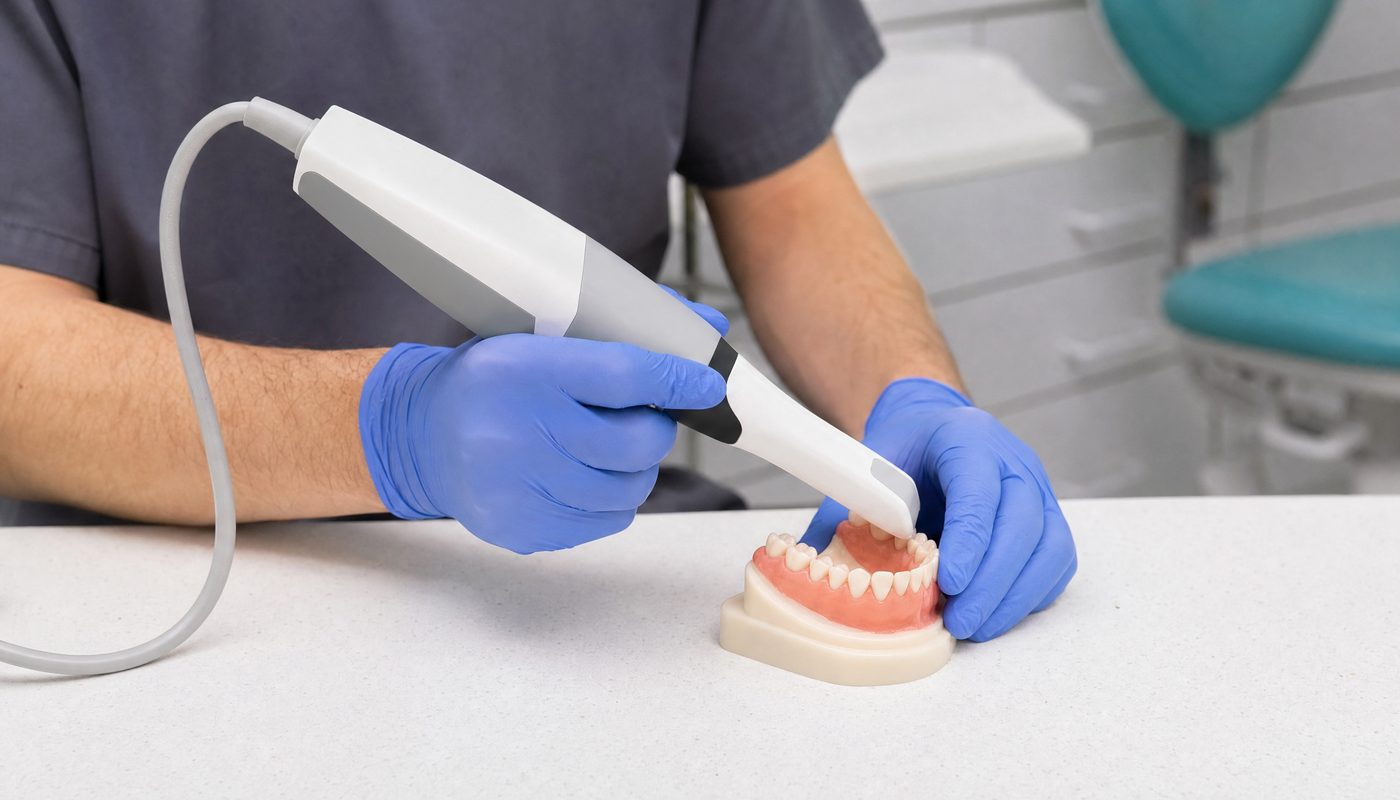
Facial and intraoral photos from set angles, short video recordings while smiling and speaking, and a three-dimensional model of the teeth with an intraoral scanner are taken. The health of the teeth and bone is checked with a panoramic X-ray. Photos and X-rays can be shared remotely; the scan is done at the in-person examination.Digital design
The physician and the laboratory design the new tooth forms using the facial references. Tooth length, width, symmetry and the gum line are determined at this stage. The design is shown to the patient on screen and feedback is taken.Trial smile
The design is transferred to a three-dimensional model and applied over the teeth with a temporary material. The patient sees the new smile in their mouth; points they do not like are corrected at this stage. No irreversible procedure has yet been done on the teeth.Preparation and temporary teeth
After approval, the planned treatment begins. If veneers or crowns are planned, the teeth are prepared as much as necessary and temporary teeth are fitted. If gum reshaping is needed, it is done at this stage or before.Final restorations
The veneers or crowns made in the laboratory are tried in, the color and bite are checked, and they are bonded.A smile design involving only veneers or crowns is usually completed in a single trip, with a stay that can range from one week to ten days. Reviewing photos and X-rays, the preliminary design and the written plan can be prepared remotely; if implants or orthodontics are included, more than one trip is needed. The exact duration varies according to the physician's plan.
Healing and what to watch for
After veneers and crowns, sensitivity to hot and cold and mild gum tenderness can occur in the first days; these usually subside within a short time. If a gum procedure was done, healing can take a few weeks.
Possible risks include prolonged sensitivity, breakage or detachment of the restorations, color mismatch and, depending on the tooth preparation, occasionally the need for root canal treatment. The trial smile stage reduces some of these risks but does not eliminate them. For people who clench their teeth, using a night guard is recommended to protect the restorations. Avoiding biting hard objects and having regular checkups extend the life of the result.
Commonly confused points
Digital smile design is not the same as having all the front teeth crowned. The design is a plan that determines which teeth need how much intervention; sometimes only a few front teeth are corrected with veneers, and sometimes teeth whitening and orthodontics are enough with no coverings at all. Covering most of the teeth is not always necessary and sacrifices healthy tooth structure. A good design aims to reach the desired look with as little intervention as possible.
You can get a free initial assessment by sending a facial photo taken while smiling, your panoramic X-ray or your existing medical reports; a specialist physician reviews them and the plan is sent to you in writing. This article is for general information only; the exact diagnosis and treatment plan are determined through an examination by a specialist physician.