

All-on-4 is an approach in which a fixed prosthesis supported by four implants replaces all the teeth in one jaw. It is an option that often comes up for people who have lost all their teeth, or whose remaining teeth cannot be saved, and who do not want to live with a removable denture. Before deciding, it is also important to know the limits of the method.
What is All-on-4 and how does it work?
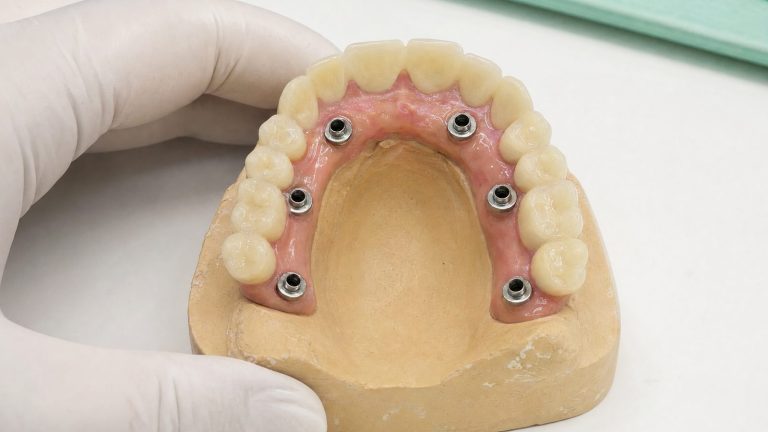
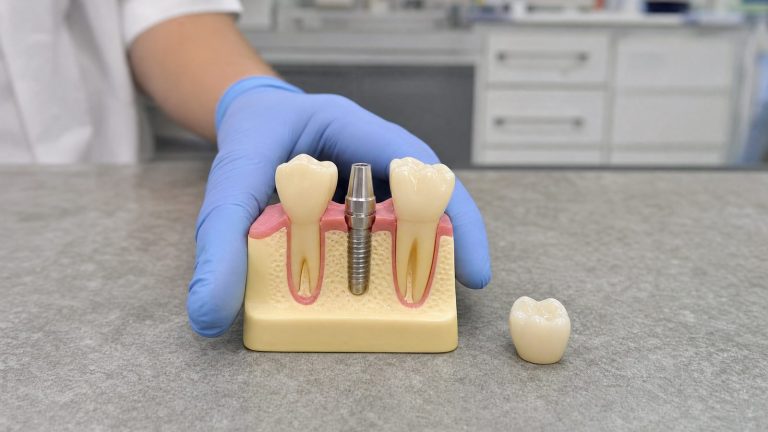
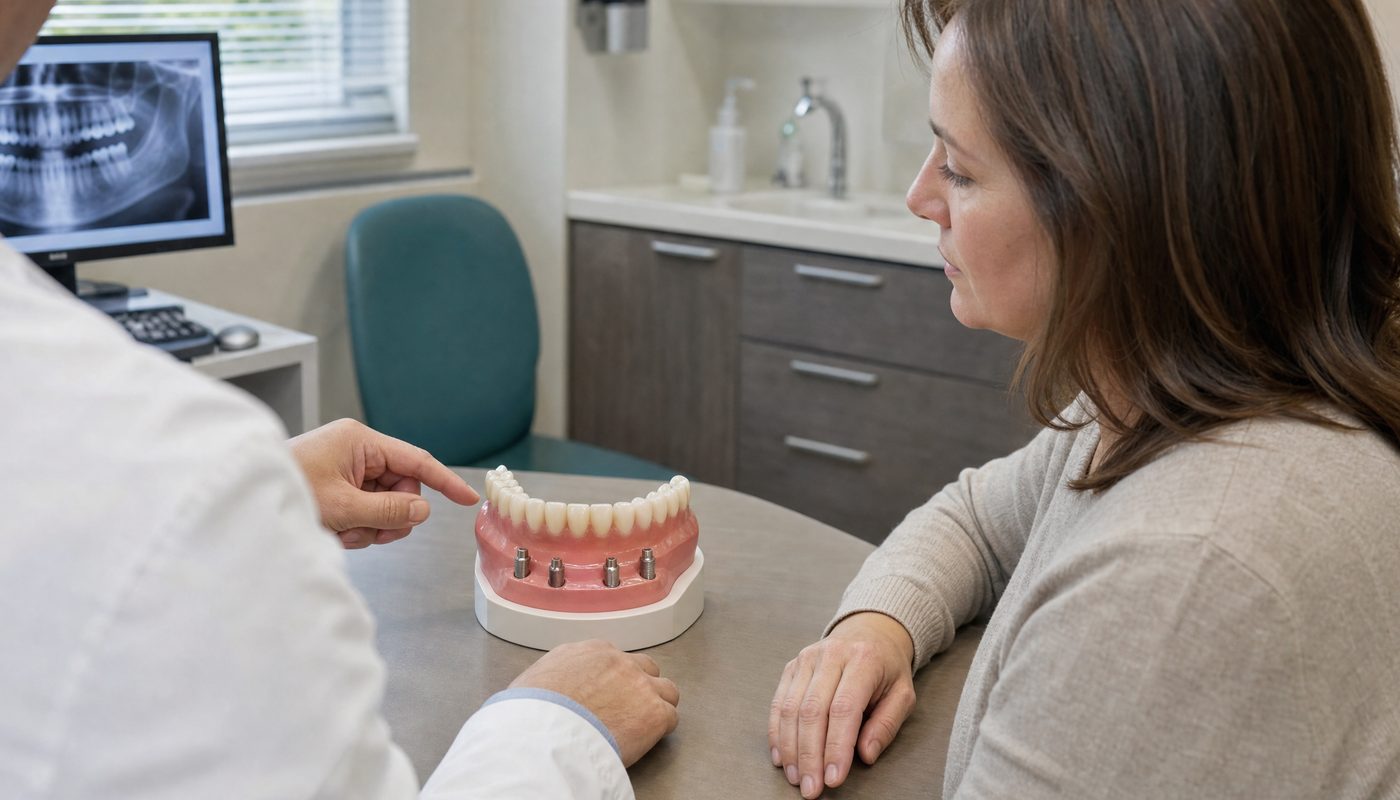
To make a fixed prosthesis for a completely toothless jaw, the conventional approach may require a larger number of implants. With the All-on-4 method, a total of four implants are placed: two straight implants in the front of the jaw and two angled implants in the back. Placing the rear implants at an angle allows support from areas where the bone is denser; it also helps avoid coming close to the sinus cavity in the upper jaw and the nerve canal in the lower jaw.
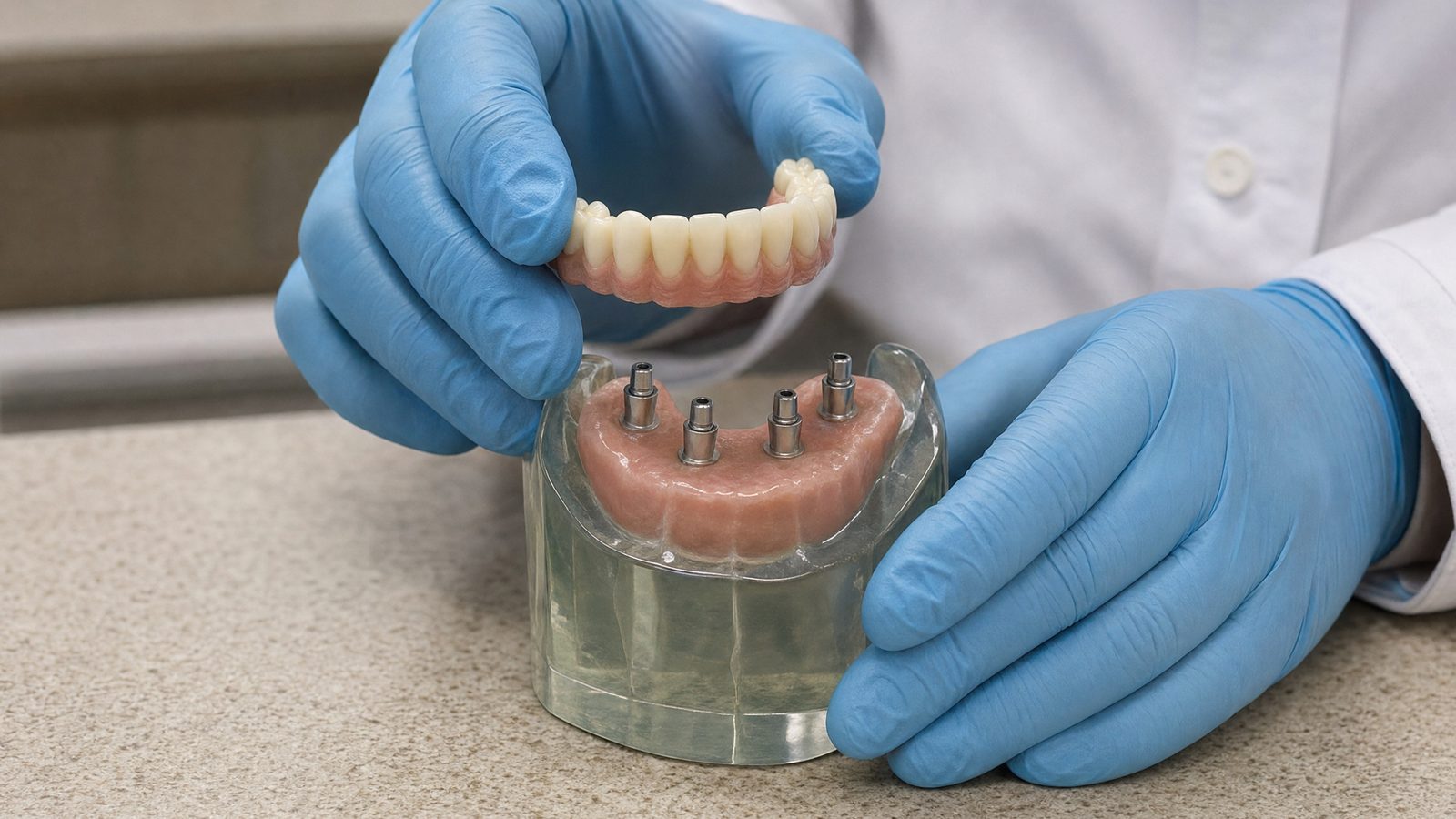
The four implants carry a single-piece bridge prosthesis that is screwed on. The patient cannot remove the prosthesis; for checks and maintenance, the dentist can unscrew and refit it. Usually a temporary prosthesis is fitted in the first stage, and the final prosthesis once bone healing is complete.
Who is it suitable for?
- People who have no teeth left in one or both jaws
- People whose remaining teeth cannot be saved because of advanced gum disease or decay
- People who use a removable complete denture but are bothered by it moving, or by difficulty speaking and chewing
- People with bone loss in the back of the jaw who do not want an extensive bone graft
- Adults whose general health is suitable for surgery and who have no uncontrolled systemic disease
Suitability is decided with a panoramic X-ray and a three-dimensional CT scan. Conditions such as uncontrolled diabetes, heavy smoking, certain bone medications and radiotherapy to the jaw area can affect the plan; these must be shared with the physician.
Treatment process
Assessment and planning
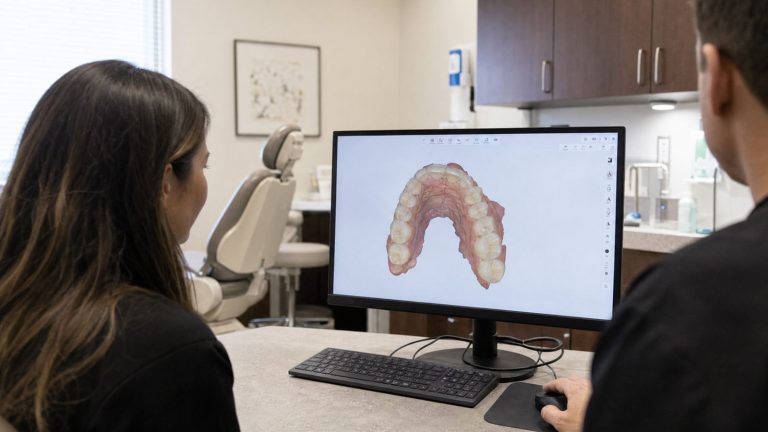
Bone volume and the positions of the sinuses and nerves are examined with a panoramic X-ray, a CT scan and an examination inside the mouth. The shape of the prosthesis, the length of the teeth and the bite relationship are planned at this stage. For a remote initial assessment, sharing your existing X-rays is enough; the exact plan is settled at the in-person examination.Surgical stage
In a single session, teeth that cannot be saved are extracted if necessary and four implants are placed. The procedure is usually done under local anesthesia; sedation support can be arranged if requested. Impressions are taken on the same day or within a few days.Fitting the temporary prosthesis
If the initial stability of the implants is sufficient, a temporary fixed prosthesis is screwed on within a few days after surgery. This way the patient is not left without teeth during healing. If stability is not sufficient, the physician may postpone the temporary prosthesis or recommend a removable temporary denture.Healing and bonding with the bone
The implants usually take three to six months to bond with the bone. The physician determines this period according to bone quality and individual healing speed. Eating soft foods is recommended while wearing the temporary prosthesis.Final prosthesis
When bonding is complete, new impressions are taken and the final prosthesis is made. The prosthesis is usually made of zirconia, acrylic or a hybrid material; the choice is made together with the physician according to chewing force, aesthetic expectations and budget.Two trips are usually planned for All-on-4: the first involves a stay of close to a week for surgery and the temporary prosthesis, and after healing a second visit of a few days is needed for the final prosthesis. Reviewing X-rays, initial planning and the written treatment plan can be done remotely. The exact duration varies according to the physician's plan.
Healing and what to watch for
Swelling, mild bleeding and pain are expected in the first days; they are kept under control with the prescribed medication and cold compresses. In the first weeks, avoiding hard and sticky foods, not smoking and keeping up oral hygiene as the physician describes directly affect healing.
Possible risks include failure of an implant to bond with the bone, infection, temporary changes in sensation, sinus complications, and breakage or wear of the prosthesis over time. Because the loss of one of the four implants can affect the support of the prosthesis, regular checkups are especially important. Dental checkups and professional cleaning at regular intervals are recommended.
The difference between All-on-4 and a conventional implant-supported prosthesis
In the conventional approach, separate implants are placed in each area, and a bone graft or sinus lift is often needed first. Because All-on-4 aims to use the existing bone with angled implants, it can sometimes make a graft unnecessary and shorten treatment time. On the other hand, it is not suitable for every patient; if bone volume is very low or chewing force is high, the physician may prefer an All-on-6 approach with six implants or a conventional plan with a graft. Which one is suitable is determined only through X-rays and examination.
You can get a free initial assessment by sending your panoramic X-ray or your existing medical reports; a specialist physician reviews your X-rays and the plan is sent to you in writing. This article is for general information only; the exact diagnosis and treatment plan are determined through an examination by a specialist physician.