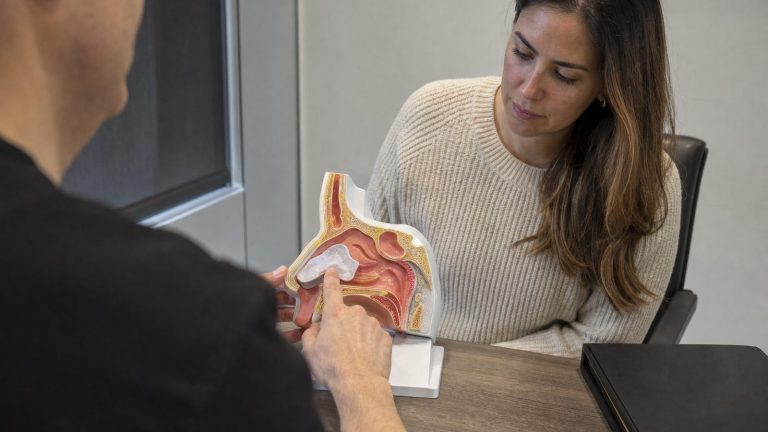


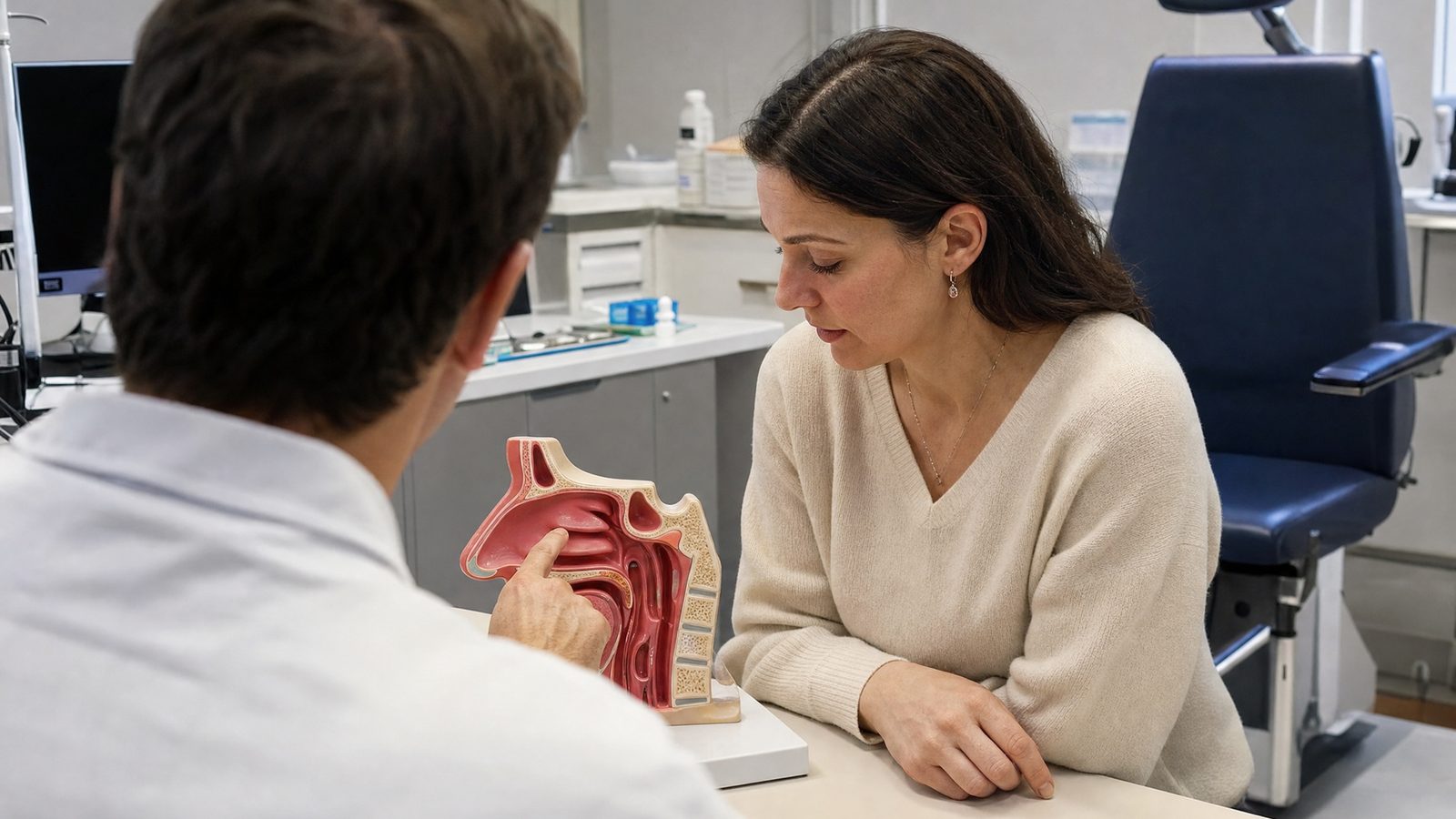
Septorhinoplasty is surgery that opens the airway by straightening the deviated partition (septum) inside the nose and, in the same session, changes the outward shape of the nose. For patients with both a blockage and a concern about appearance, the two problems are addressed in a single operation. This article was written for readers who say, "My nose is crooked and I cannot breathe comfortably."
What is a deviated septum, and what does it cause?
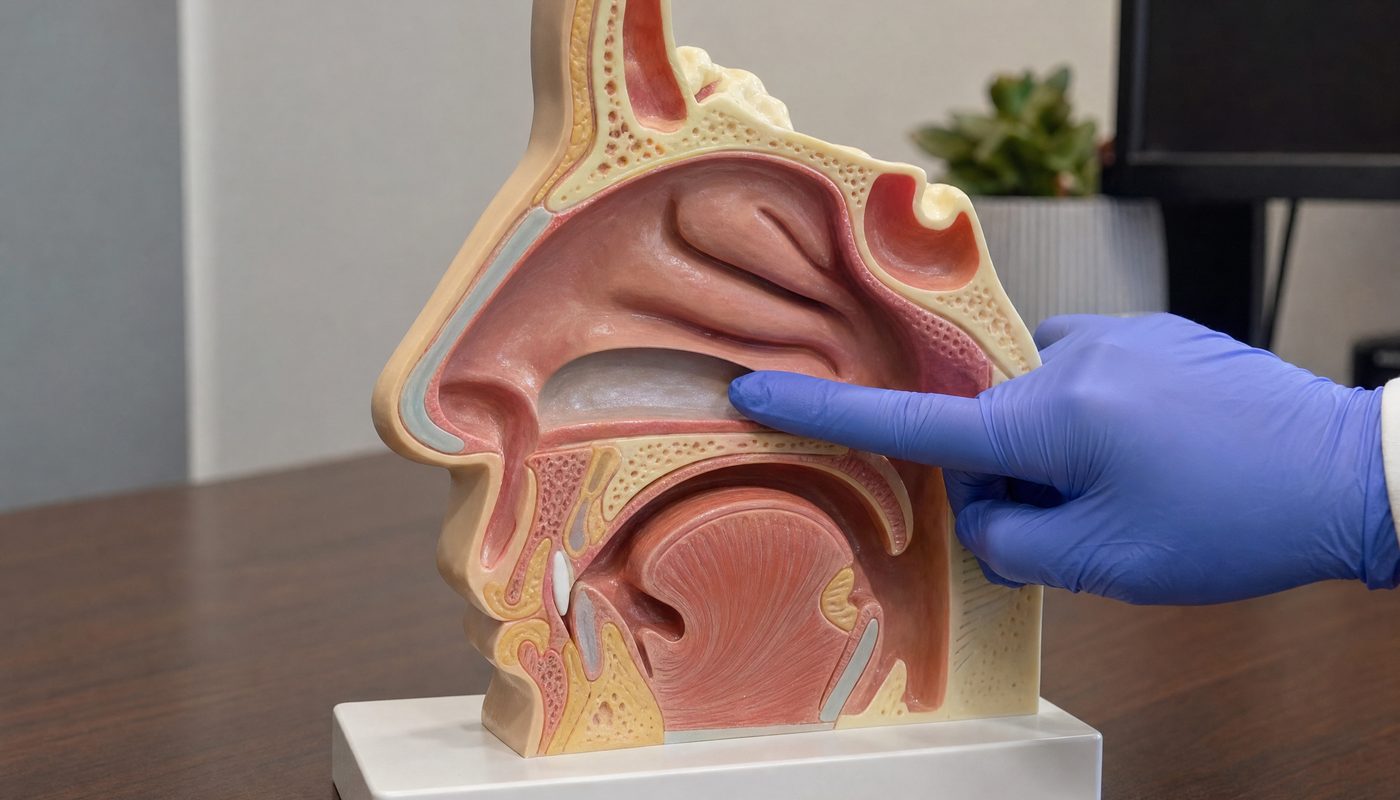
The septum is the partition made of cartilage and bone that divides the nasal cavity in two. When it leans to one side, either from birth or after a blow, the airway on that side narrows. This narrowing can cause one-sided or variable blockage, mouth breathing, snoring, frequent sinus infections and nosebleeds.
Seen from the outside, the bridge of the nose may look shifted to one side or the tip may look slightly turned sideways; however, not every deviated septum is visible from outside, and not every crooked-looking nose is blocked inside. This is why examination and, if needed, endoscopic inspection are important.
The septum may not be the only cause of breathing problems. Enlargement of the turbinates (nasal conchae), weakness of the nasal valve or allergic swelling also cause blockage. Good planning separates which of these can be corrected by surgery.
Septorhinoplasty is performed by both ENT (ear, nose and throat) specialists and plastic surgeons. For problems mainly of the airway, ENT training stands out; for problems mainly of the outward shape, aesthetic experience stands out; in both fields, experienced physicians address both dimensions together.
Who is it suitable for?
- People with nasal blockage from a deviated septum who are also bothered by the shape of their nose
- People whose nose has been bent by a blow and whose airway has narrowed
- People who have had only septoplasty before but still have an external deviation
- Patients who have completed facial growth and are in suitable general health
- For people who only have a breathing problem and are satisfied with their appearance, septoplasty alone may be enough; this distinction is made at the examination
The surgical process
Airway assessment
The physician examines the inside of the nose and, if needed, looks with an endoscope. The source of the blockage is identified: septum, turbinates, nasal valve area, or several together. Sometimes a computed tomography (CT) scan is requested.Plan for the outward shape
The deviation of the bridge, the hump and the nasal tip are assessed. Situations in which internal and external problems are connected (for example, a deviated septum pushing the nasal tip sideways) are addressed together in the plan.Surgery
Under general anesthesia, mostly with the open technique, the deviated parts of the septum are removed or straightened; the supporting framework that holds the nose up is preserved. Cartilage that is removed can be used as a graft if needed. If the turbinates are enlarged, they are reduced. Then the bone and cartilage are adjusted for the outward shape.Splint and cast
To hold the septum in its new position, a silicone splint is placed inside the nose and a cast on the outside. The splints are usually removed within the first week.Check-up
The openness of the airway and the settling of the outward shape are assessed over months. In the first weeks, breathing may not yet be fully comfortable because of the swelling inside.For septorhinoplasty, a stay of about one week is usually planned in Türkiye; the splints and cast are removed after about a week, the airway is cleaned at the check-up and flying is permitted. The exact duration varies according to your physician's plan.
Recovery and what to watch for
The nose feels blocked during the first week; this is due to the splints inside and the swelling, and it does not mean the operation did not work. Relief begins when the splints come out, but the swelling inside continues to decrease over several weeks.
- Saline spray and the intranasal care the physician recommends reduce crusting.
- Instead of blowing your nose, it is recommended to clean it gently by sniffing.
- Sleeping with the head elevated helps with both swelling and blockage.
- Glasses, rough contact and heavy exercise are restricted in the first weeks.
Risks include bleeding, infection, a hole in the septum (perforation), a temporary change in the sense of smell, blockage not fully resolving and asymmetry in the outward shape. A deviated septum can partly redevelop over the years; this rarely requires a second operation. Blockage with an allergic cause does not improve with surgery; this distinction should be made beforehand.
The difference between septoplasty, rhinoplasty and septorhinoplasty
Septoplasty only straightens the partition inside the nose, does not change the outward appearance and is considered a medical necessity in most places. Rhinoplasty focuses only on the outward shape. Septorhinoplasty combines the two: the airway is opened inside and the shape is corrected outside.
The advantage of doing them together is that cartilage removed from the septum can be used as a graft for the outward shape, and that two problems are solved with one anesthesia and one recovery period. The disadvantage is that the operation is more extensive and requires two separate goals to be planned together. Which part counts as medical and which as aesthetic for insurance and payment varies by country and institution; this should be clarified beforehand.
You can request a free initial assessment by sending photos of your nose and, if you have any, information about a previous nose operation; a specialist reviews your photos and the plan is sent to you in writing. This article is for general information only; the definitive diagnosis and treatment plan are determined by a specialist's examination.