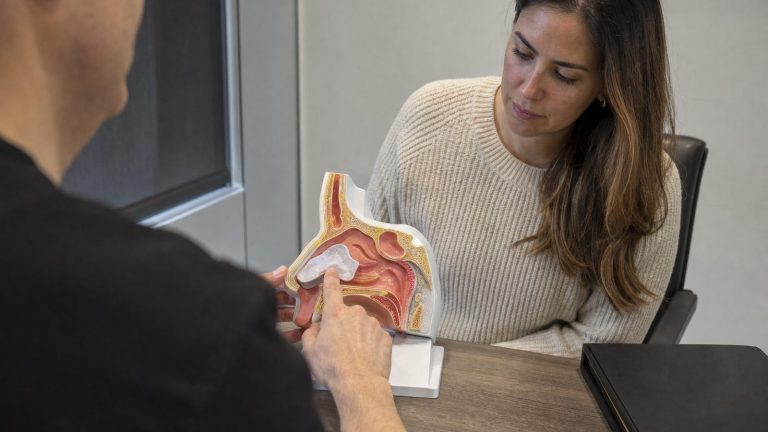



Rhinoplasty is surgery performed to change the outward appearance of the nose or to correct structural problems that make breathing difficult. This guide was written for readers who are researching nose surgery for the first time and want to know what to expect.
What does rhinoplasty do, and what does it not do?
The nose consists of bone, cartilage and the soft tissue that covers them. In rhinoplasty the surgeon reshapes these structures: a hump on the bridge can be reduced, the tip can be lifted or thinned, the nostrils can be narrowed, and a nose that looks out of proportion with the face can be resized to suit it. Deviations that affect the airway can also be corrected in the same session; in this case the procedure is called septorhinoplasty.
Rhinoplasty does not change the whole face; it aims to bring the nose into harmony with the other lines of the face. Because skin thickness, cartilage structure and the way a person heals vary from one person to the next, the result is also individual. Instead of asking for the exact nose you like in a photograph, setting a goal that suits your own face is a more realistic approach.
In Türkiye this surgery is performed both by ear, nose and throat (ENT) specialists and by specialists in plastic, reconstructive and aesthetic surgery. Both branches are trained in this field; what matters is the physician's experience with rhinoplasty and that they offer a plan suited to your nose.
Who is it suitable for?
- People bothered by a hump on the bridge of the nose, or by a drooping or wide nasal tip
- People who find their nose large for their face or asymmetrical
- People whose nose shape changed after a blow or an accident
- People who have difficulty breathing because of a deviated septum or similar causes and who want their shape corrected in the same session
- People who have completed facial growth and whose general health is suitable for surgery
- People with realistic expectations who can set aside time for the recovery process
Chronic diseases that are not under control, some blood-thinning medications, active smoking or facial growth that is not yet complete may require surgery to be postponed. The final decision on this rests with the examining physician.
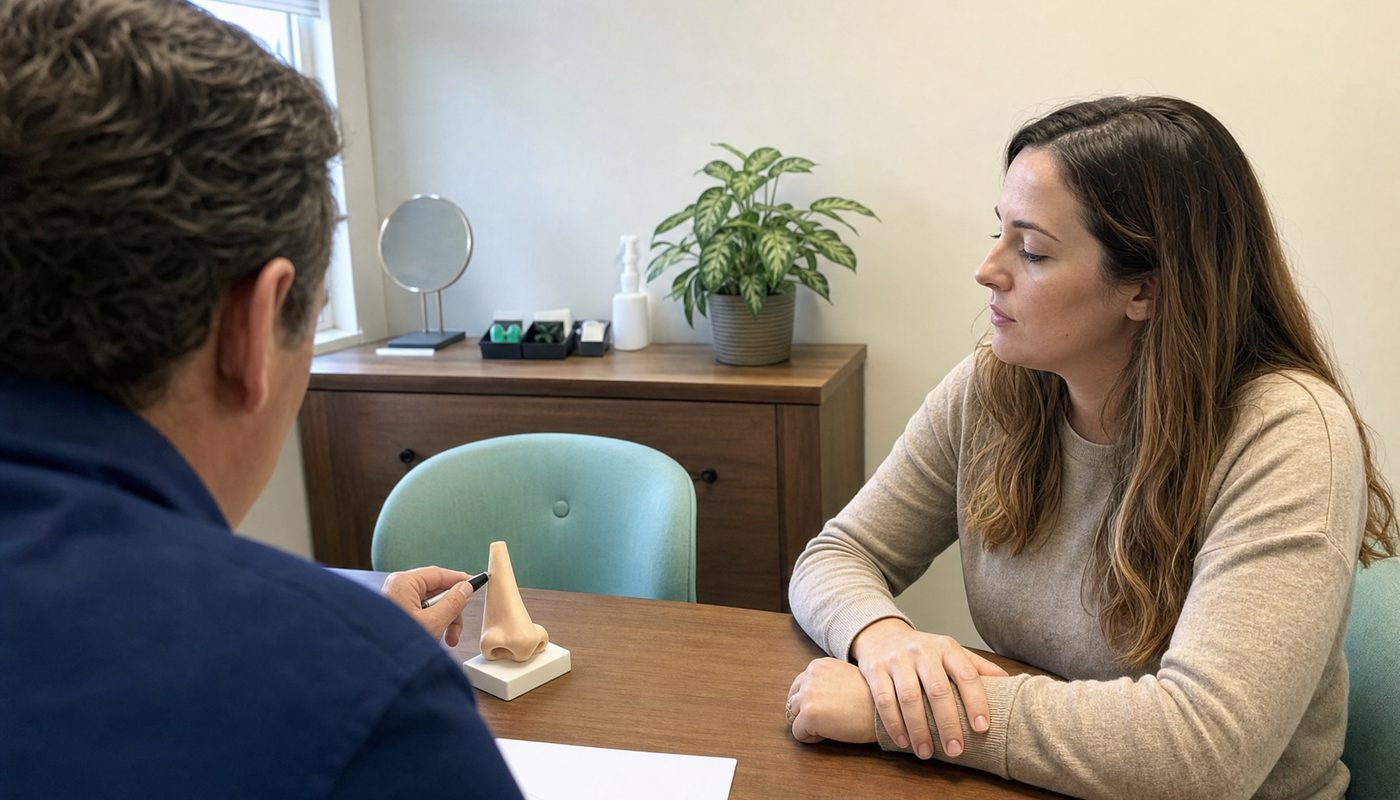
The surgical process
Assessment and planning
The physician examines your nose from the outside and the inside, checks the airway and looks at the thickness of the skin. Which changes are possible is discussed using photographs. At this stage it is important to explain your expectations clearly.Preparation before surgery
Blood tests and, if needed, additional examinations are carried out. You will be asked to stop medications and supplements that have a blood-thinning effect, with the physician's approval. If you smoke, pausing before and after surgery makes healing easier.Day of surgery
Rhinoplasty is mostly performed under general anesthesia. The structures of the nose are reached with the open or closed technique, and the planned changes are carried out. The duration of surgery varies with the procedure; it usually takes a few hours. Most patients stay one night in the hospital or are discharged the same day; this varies with the physician and the hospital.Cast and first check-up
A cast is placed on the bridge of the nose and, if needed, a silicone splint or packing inside the nose. These are usually removed within the first week. At the first check-up the sutures are removed and the nose is cleaned.Follow-up
Swelling subsides slowly. In the first months the nose looks somewhat fuller than it will eventually; the nasal tip in particular is the area that settles last. The physician schedules check-ups at regular intervals.For rhinoplasty, the length of stay in Türkiye is usually planned at around one week; surgery is performed in the first days, the cast and splints are removed after about a week, and flying is permitted after the final check-up. The exact duration varies according to your physician's plan.
Recovery and what to watch for
Bruising and swelling around the eyes are normal in the first days. Mild pain and a feeling of nasal congestion are expected; these are managed with the medications the physician gives. Sleeping with the head elevated, cold compresses and saline spray are generally recommended.
- While the cast is on, take care not to wet or bump your nose.
- In the first weeks, wearing glasses, heavy exercise and lifting loads while bending over are restricted.
- Prolonged sun exposure can increase the risk of bruises leaving permanent marks.
- Blowing and scratching the nose are postponed until the physician allows it.
As with any surgery, bleeding, infection and problems related to anesthesia can occur. Specific to rhinoplasty, a permanent change in sensation, unexpected difficulty breathing, asymmetry or a shape you do not like may arise. A small number of patients may need a second corrective operation. These possibilities should be discussed openly in the consultation before surgery.
Commonly confused points
Rhinoplasty and septoplasty are not the same thing. Septoplasty only corrects the deviated partition inside the nose and does not change the outward appearance. Rhinoplasty focuses on the external shape; when the two are done together, the procedure is called septorhinoplasty.
Nasal filler is not a substitute for rhinoplasty either. Filler can temporarily conceal small depressions, but it cannot make the nose smaller or open the airway, and its effect wears off over time.
Nor is the first appearance after surgery the final result. The nose takes shape as the swelling subsides; this process takes months. Instead of deciding early, it is better to wait for the physician's follow-up schedule.
You can request a free initial assessment by sending photos of your nose taken from the front, the side and below; a specialist reviews your photos and a plan suited to you is sent in writing. This article is for general information only; the definitive diagnosis and treatment plan are determined by a specialist's examination.