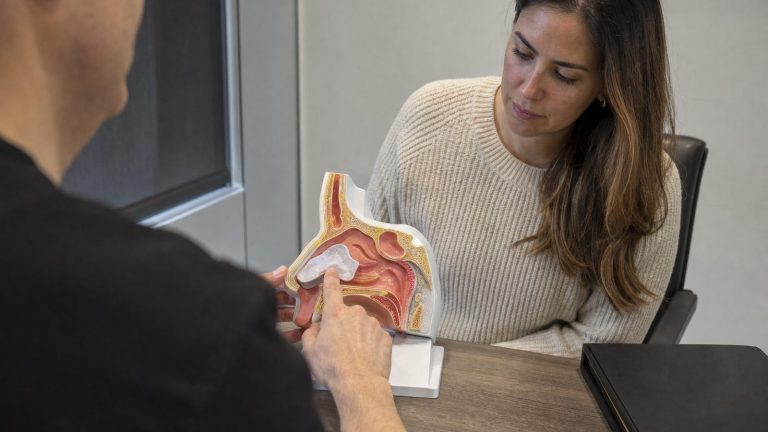


Piezo rhinoplasty is a rhinoplasty approach in which the nasal bone is shaped with a fine-tipped instrument that works with ultrasonic vibration. In the classic method the bone is broken with a chisel and hammer, whereas here it is cut or filed in a controlled way. This article is for readers who have heard the phrase "ultrasonic nose surgery" and wonder what it means.
What does the piezo device do?
A piezoelectric device uses fine tips that produce high-frequency vibration. These tips affect only hard tissue, that is, bone; they have no cutting effect when they touch cartilage, blood vessels or soft tissue. This allows the surgeon to cut, thin or shape the nasal bone with millimeter precision.
In classic rhinoplasty, the bone is cut with a chisel called an osteotome. It is a safe method in experienced hands, but exactly where the fracture line will form cannot always be controlled precisely, and there can be more trauma to the surrounding tissue. With piezo, the bone cut is made along the planned line; in some patients this is associated with less bruising and swelling. Even so, this effect varies according to the person, the skin structure and the extent of the procedure.
Because the piezo device requires the bone to be directly visible, it is mostly used together with the open rhinoplasty technique. The method is performed by both ENT (ear, nose and throat) specialists and plastic surgeons; what matters is that the physician has experience with this device.
Who is it suitable for?
- People with a pronounced hump on the bridge of the nose who need bone shaping
- People whose nasal bones are wide or asymmetrical and need narrowing
- Patients with thin skin, for whom precise bone cutting is especially important
- People who have had trauma before and have an irregular bone structure
- Revision rhinoplasty cases that require controlled work on the bone
Piezo offers no added benefit for noses that do not need bone work. If the problem is only at the nasal tip or in the cartilage structure, using the device may not be necessary. The physician makes this decision after the examination.

The surgical process
Planning
During the examination, the structure of the nasal bone, the height of the hump and the thickness of the skin are assessed. The physician explains whether the bone will be shaped with piezo and the reasons for this in your nose.Exposing the bone
Under general anesthesia, the skin of the nose and the membrane beneath it are lifted, usually with the open technique. This area must be open so that the piezo tips can reach the bone directly.Ultrasonic shaping
If there is a hump, it is removed with the ultrasonic saw tip or thinned with the rasp tip. If the nasal bones need to be narrowed, the cut lines are created with the device and the bones are moved into their new position.Cartilage work and closure
Adjustments to the nasal tip and septum are made with classic methods. The incisions are sutured, and a cast and, if needed, internal splints are placed.A stay of about one week is usually planned in Türkiye for piezo rhinoplasty; the cast is removed after about a week, and flying is permitted after the check-up. The exact duration varies according to your physician's plan.
Recovery and what to watch for
Recovery rests on the same principles as classic rhinoplasty: a cast for the first week, swelling and possible bruising in the first days, keeping the head elevated, cold compresses and protecting the nose. In some patients bruising is milder, but this is not seen in every patient; going into surgery expecting "no bruising" would not be right.
- Bone healing takes weeks; it is important that the nose is not struck during this period.
- Wearing glasses is postponed until the physician allows it.
- When piezo is combined with the open technique, swelling of the nasal tip subsides later than in other areas.
The risks are shared with other types of rhinoplasty: bleeding, infection, asymmetry, breathing problems, unmet expectations and, rarely, the need for revision. The device does not add a significant new risk to the known risks of rhinoplasty; however, as with any technology, the result depends on the experience of the physician using the instrument.
Differences between piezo and the classic method
Classic osteotomy is fast and gives a predictable result in experienced surgeons. Piezo may take longer, but it keeps the bone cut on the planned line and protects the surrounding soft tissue. With both methods, work on the nasal tip, cartilage and septum follows the same principles; in other words, piezo changes only the bone stage of rhinoplasty.
Although "ultrasonic rhinoplasty" is sometimes presented in marketing language as an entirely different operation, it is in reality a choice of instrument. For this reason, when looking for a physician, it makes more sense to ask what plan the physician proposes for your bone structure than to ask "do you have piezo?"
You can request a free initial assessment of whether the piezo method makes sense for you by sending photos of your nose; a specialist reviews your photos and the plan is sent to you in writing. This article is for general information only; the definitive diagnosis and treatment plan are determined by a specialist's examination.