

A porcelain veneer (laminate veneer) is a thin porcelain shell bonded only to the front surface of a tooth. It comes up for people who are bothered by the color or shape of their front teeth or by gaps between them, and who want an aesthetic change while reducing their teeth as little as possible. E-max, on the other hand, is the name of a widely used glass ceramic material; because both veneers and crowns can be made from this material, the two concepts are often confused.
What is the difference between veneers and E-max?
A veneer is a method of application: a very thin layer is removed from the tooth enamel, or in some cases none at all, and then the porcelain shell is bonded to the front surface of the tooth. The back of the tooth and, in most cases, the cutting edge are preserved.
E-max, on the other hand, is a material: lithium disilicate glass ceramic. Because it lets light through well, it gives an appearance close to a natural tooth and bonds strongly to the enamel. Both thin veneers and full crowns that completely surround the tooth can be made from this material. So the answer to the question "E-max or veneers?" is often "both together": making veneers from E-max material for the front teeth is a common practice.
Veneers can also be made from other types of porcelain, for example feldspathic porcelain. Feldspathic veneers can be thinner and very successful aesthetically, but they are more brittle. Which material is chosen is decided by the physician and the laboratory according to tooth color, the amount of change wanted and bite force.
Who is it suitable for?
- People with discoloration on the front teeth who have not achieved the desired result with whitening
- People who have a gap (diastema) between their teeth
- Patients with mild crowding or a shape irregularity who do not want orthodontics
- Teeth with a worn cutting edge or small chips
- People whose tooth structure is largely sound, that is, who do not need a full crown
In people with large fillings, advanced decay, or serious loss of tooth structure after root canal treatment, a veneer cannot find enough support; in this case a full crown comes into play. Teeth clenching and grinding habits, a deep bite and severe crowding can shorten the life of a veneer; these conditions should be assessed first.
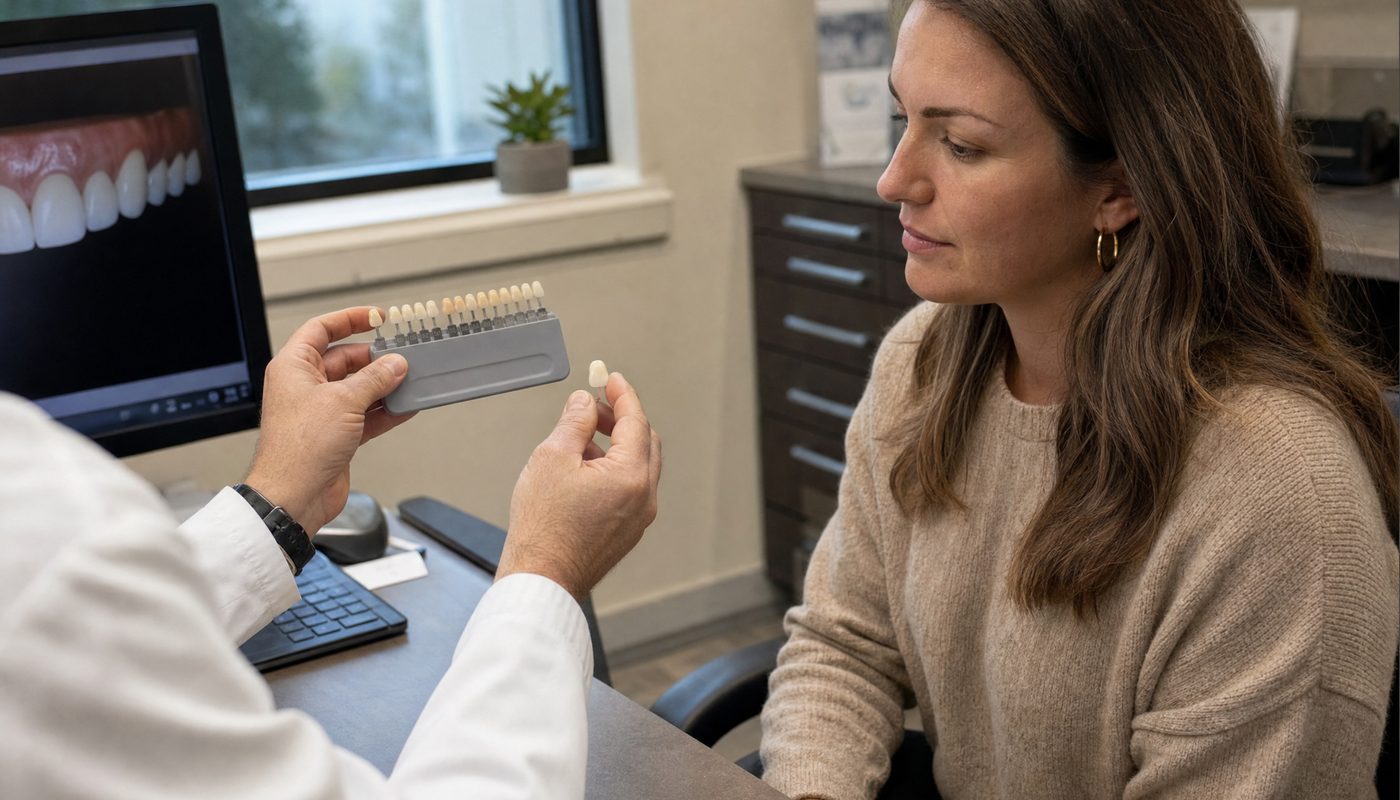
Treatment process
Examination and design
The health of the teeth is checked with a panoramic X-ray, and photos and a scan are taken. The new tooth form is planned with digital smile design or a wax-up and shown to the patient. Photos and X-rays can be reviewed remotely.Trial smile
The planned form is applied over the teeth with a temporary material. The patient sees the result in their mouth; requests for changes are taken at this stage.Preparing the teeth
As little reduction as possible is done. This is often done under local anesthesia; in some cases anesthesia may not be needed. Temporary veneers are fitted.Impression and fabrication
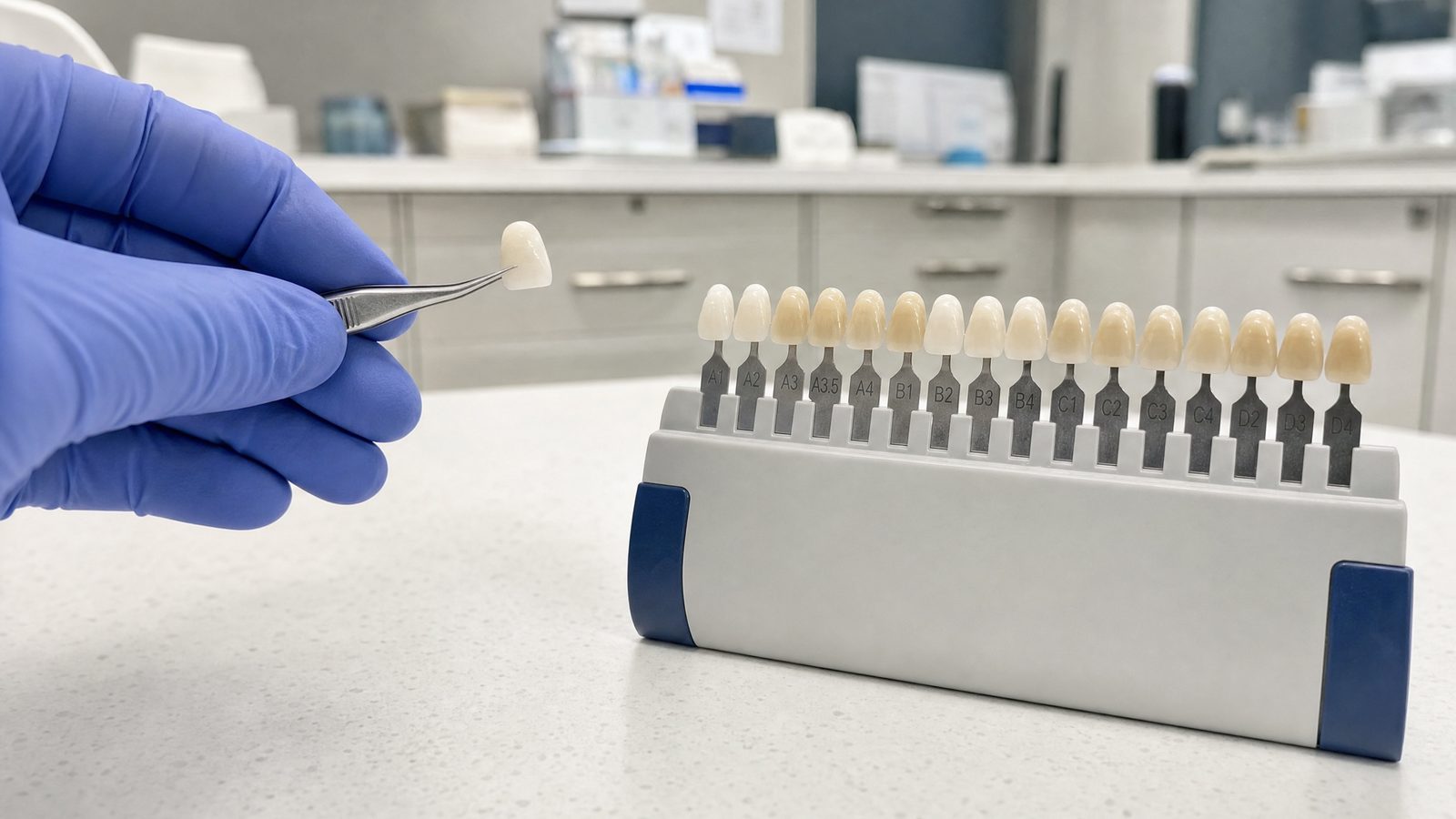
The digital scan or impression is sent to the laboratory. The veneers are made from E-max or the chosen type of porcelain.Try-in and bonding
The veneers are tried in for color and fit. The tooth surface is prepared, the veneer is bonded with a special resin cement and the bite is checked.Veneer and E-max procedures are usually completed in a single trip; a stay of one week to ten days is planned for design, preparation, fabrication and bonding. Photo and X-ray review and the preliminary design can be done remotely. The exact duration varies according to the physician's plan.
Healing and what to watch for
After bonding, sensitivity to hot and cold and mild gum tenderness can occur for a few days. The teeth may feel unfamiliar in the first days; this feeling usually passes within a short time.
Possible risks include breakage or detachment of the veneer, continued sensitivity, discoloration at the edges, the margin line becoming visible as the gums recede, and, rarely, the need for root canal treatment after preparation. If the enamel has been reduced, a veneer is a procedure that cannot be reversed; from then on the tooth must always remain covered with a restoration. Not biting hard objects, not biting your nails, using a night guard and having regular checkups extend the life of a veneer.
Veneer or full crown?
A veneer provides aesthetic correction with little loss of tooth material, but because it does not wrap all the way around the tooth, it does not strengthen weak teeth. A full crown removes more tooth structure, but in return it supports teeth that are broken, have large fillings or have had root canal treatment. For sound front teeth, a veneer is considered first for aesthetics; for teeth with a structural problem, a full crown. It is also common for some teeth in the same mouth to be planned for veneers and others for crowns.
You can get a free initial assessment by sending your panoramic X-ray, a photo taken while smiling or your existing medical reports; a specialist physician reviews them and the plan is sent to you in writing. This article is for general information only; the exact diagnosis and treatment plan are determined through an examination by a specialist physician.