

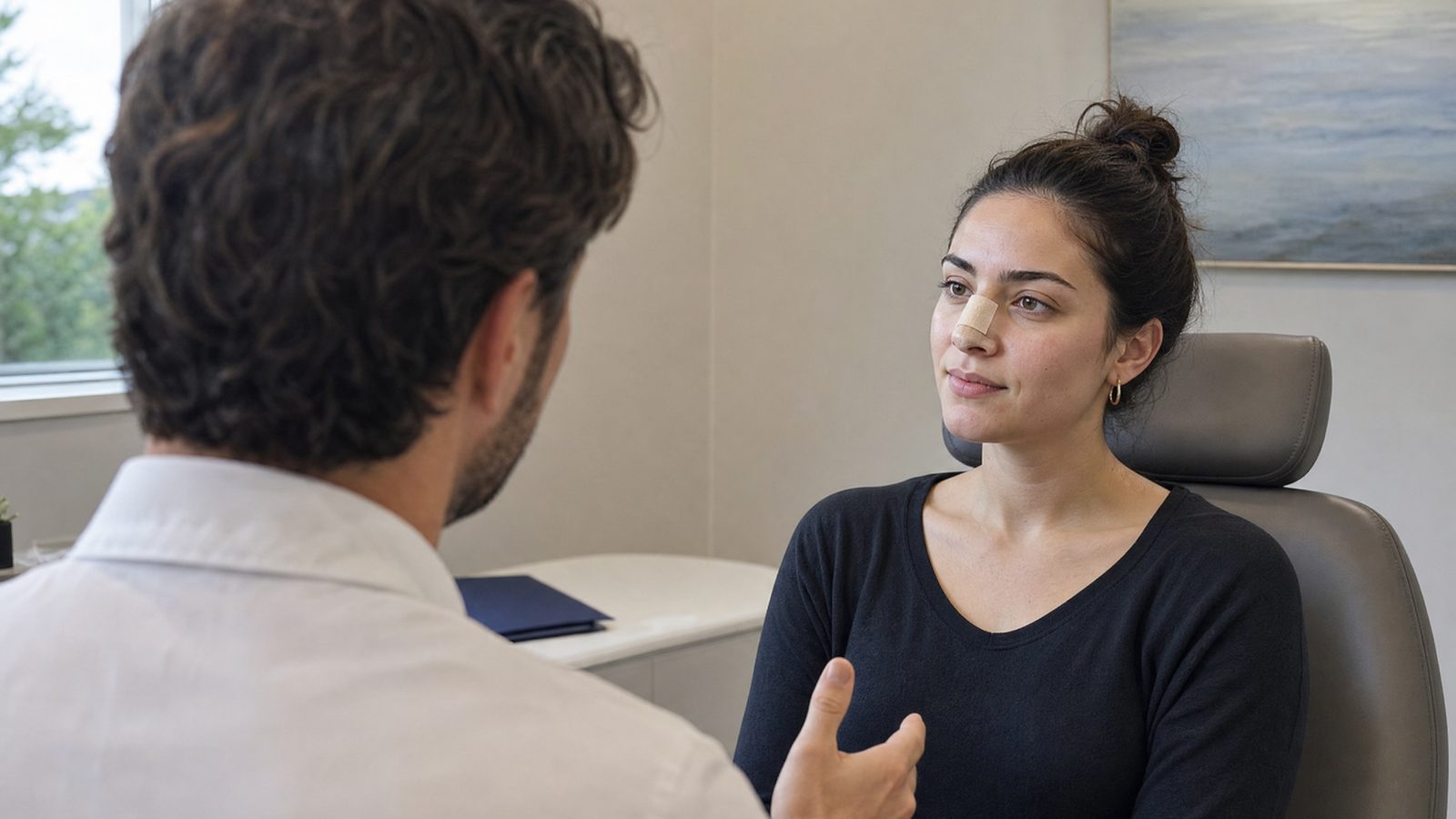
The result of rhinoplasty takes shape not on the operating table but in the months that follow. Knowing what is normal and when both reduces worry and makes recovery easier. This article walks through the first month step by step for readers whose surgery date is approaching or who are living through the first days.
What happens in the first days?
When you come out of surgery, you have a cast on the bridge of the nose, often a silicone splint or packing inside the nose, and a small drip pad under the nose. The nose is blocked and you breathe through the mouth. This is the part patients find hardest; dryness of the lips and throat is normal.
Bruising and swelling around the eyes increase over the first two or three days, then begin to subside. Mild pain, a feeling of pressure and bloody oozing are expected. The painkiller and, if prescribed, the antibiotic from the physician are taken regularly. Medications with a blood-thinning effect are avoided without the physician's approval.
What to do in this period is simple: sleep with the head elevated on two pillows, apply cold compresses around the eyes, drink plenty of fluids and prefer soft, lukewarm foods. Hot showers and hot drinks are limited in the first days because they can increase swelling.
Who is it suitable for?
This guide applies to everyone who has had rhinoplasty; in the following groups, however, the process takes somewhat longer or needs closer monitoring:
- People with thick skin: swelling at the nasal tip lasts longer and calls for patience.
- People who have had revision surgery: swelling subsides more slowly because of scar tissue.
- Smokers: wound healing can be delayed because circulation is impaired; a pause of several weeks before and after surgery is expected.
- People with allergic rhinitis: swelling inside the nose can prolong congestion, so a medication plan should be made with the physician.
- Patients coming from abroad: the check-up and flight schedule is arranged around the recovery plan.
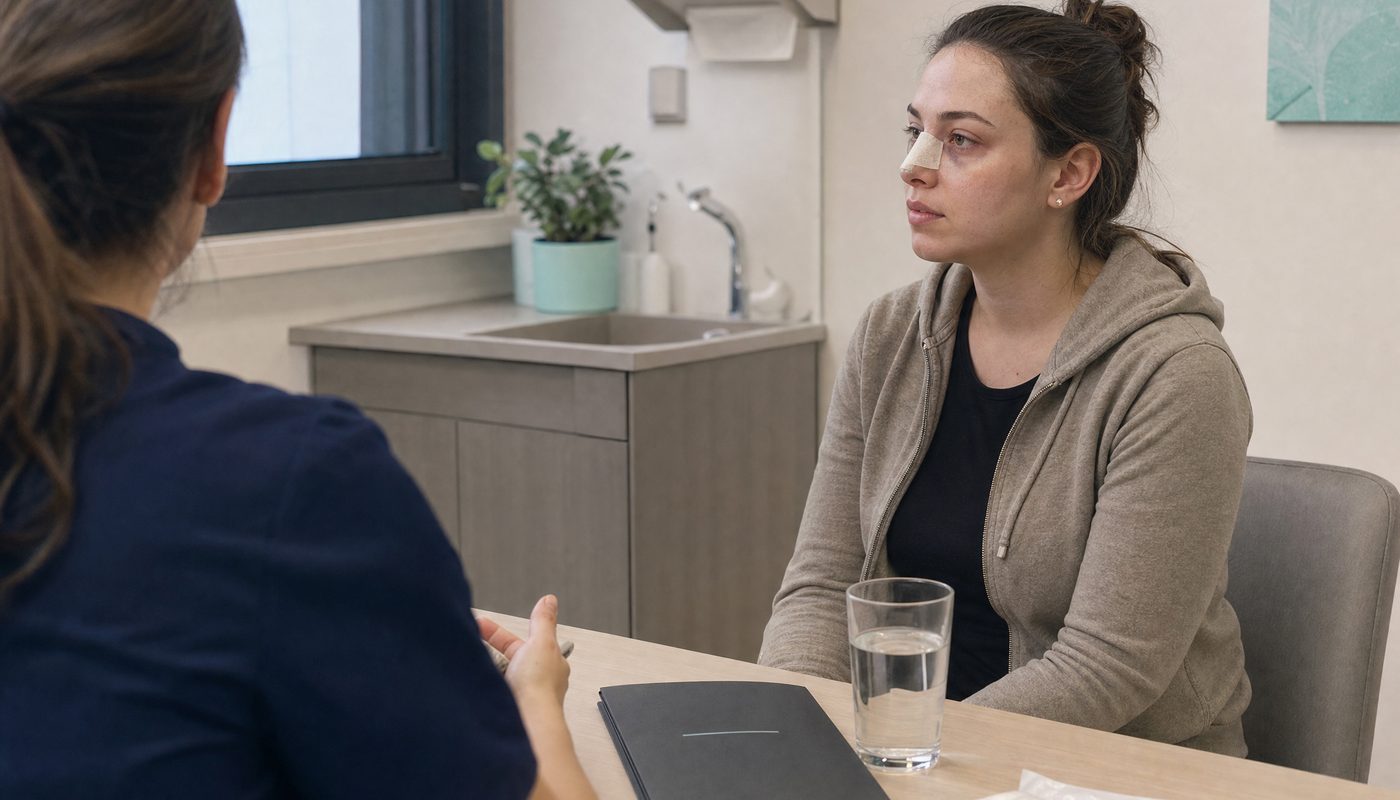
The surgical process
Day of surgery and hospital stay
Surgery is performed under general anesthesia. Most patients stay one night in the hospital; some physicians discharge patients the same day. A nurse monitors bleeding and general condition, and the first cold compresses begin here.Discharge and the first three days
This is a period of rest at home or at the hotel. Swelling and bruising are at their most pronounced on these days. The pad under the nose is changed as it becomes soiled. If there is fever, increasing pain or bleeding that does not stop, tell the physician.Removal of the cast and splints
Usually about a week after surgery, the cast, the internal splints and the external sutures are removed. This check-up is the moment when breathing feels easier and the nose is seen for the first time. At this stage the nose is still swollen and larger than it will eventually be; some physicians ask for taping for a few days after the cast comes off.Second and third weeks
Bruises turn yellow and disappear, and most of the swelling subsides. Returning to desk work is possible for most patients in this period. Light walking is allowed; heavy exercise and working while bent over are not yet recommended.End of the first month
To an outside observer, the nose begins not to look operated on. Even so, stiffness, fullness and numbness at the nasal tip persist. If the physician has recommended taping or massage, it is applied. This period is not the result but the middle of the process.For rhinoplasty, a stay of about one week is usually planned in Türkiye; the cast and splints are removed at the end of this period, and if there are no problems at the check-up, the return flight can be made. The exact duration varies according to your physician's plan.
Recovery and what to watch for
Rules expected to be followed in the first month:
- Glasses: not worn until the physician allows it, so that they do not press on the bridge of the nose; contact lenses or glasses taped to the forehead can be a temporary solution.
- Exercise: light walking from the first week, brisk sport generally after a few weeks, contact sports much later.
- Sun: high-protection sunscreen is used in the first months so that bruising and redness do not leave permanent marks.
- Blowing and sneezing: in the first weeks, instead of blowing, the nose is cleaned gently; keep your mouth open when sneezing.
- Smoking and alcohol: they have a negative effect on wound healing and swelling.
- Makeup: after the sutures are removed and the skin has closed, with the physician's approval.
Signs that call for contacting the physician immediately: bleeding that does not stop, high fever, increasing pain or redness, foul-smelling discharge, sudden vision changes, the cast moving out of place or a blow to the nose.
Possible problems include infection, bleeding, prolonged swelling, skin discoloration, permanent numbness and the expected shape not fully forming. Most of these can be managed when noticed early; for this reason it is important not to miss the check-up schedule.
When does the swelling go down, and when is the result seen?
Most of the swelling subsides in the first weeks, but the fine swelling at the nasal tip recedes slowly over months. The nose is generally considered to have largely reached its final shape at the end of the first year; in patients with thick skin this period can be even longer. Looking swollen in the morning and thinner in the evening, or a temporary fullness in the heat, is normal in this period.
Judging the final result from early photographs creates both unnecessary worry and early requests for revision. Following your physician's check-up schedule and asking your questions at those appointments helps you get through this period more calmly.
You can request a free initial assessment by sending your photos and, if you have any, information about previous surgery; a specialist reviews your photos, and the plan and recovery schedule are sent to you in writing. This article is for general information only; the definitive diagnosis and treatment plan are determined by a specialist's examination.