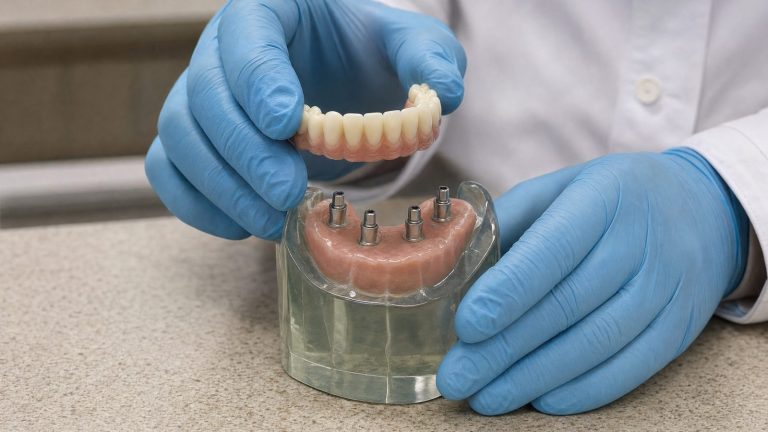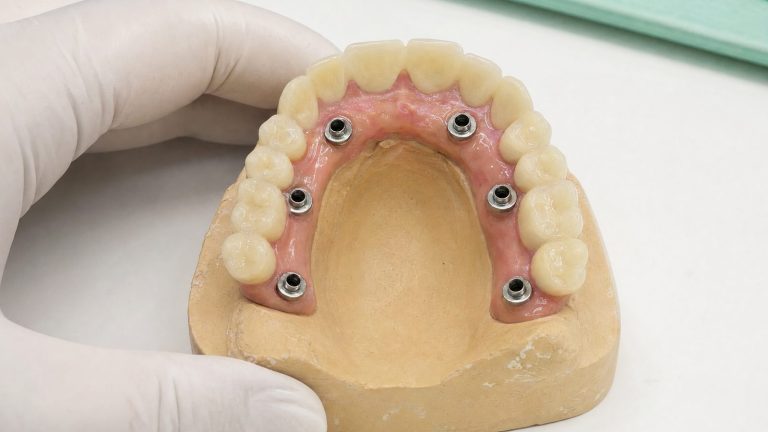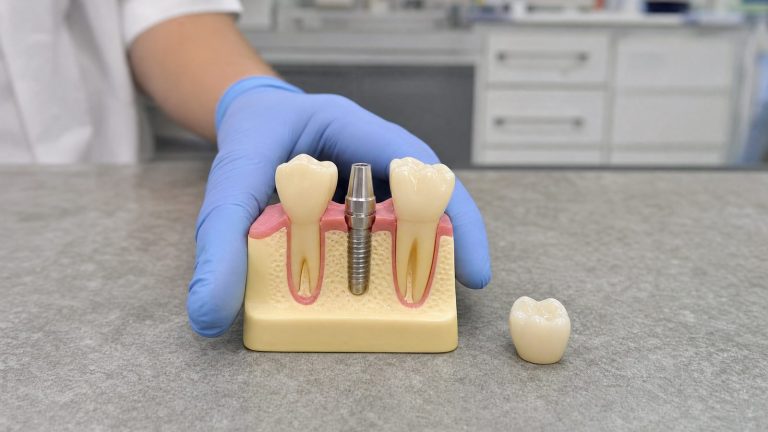


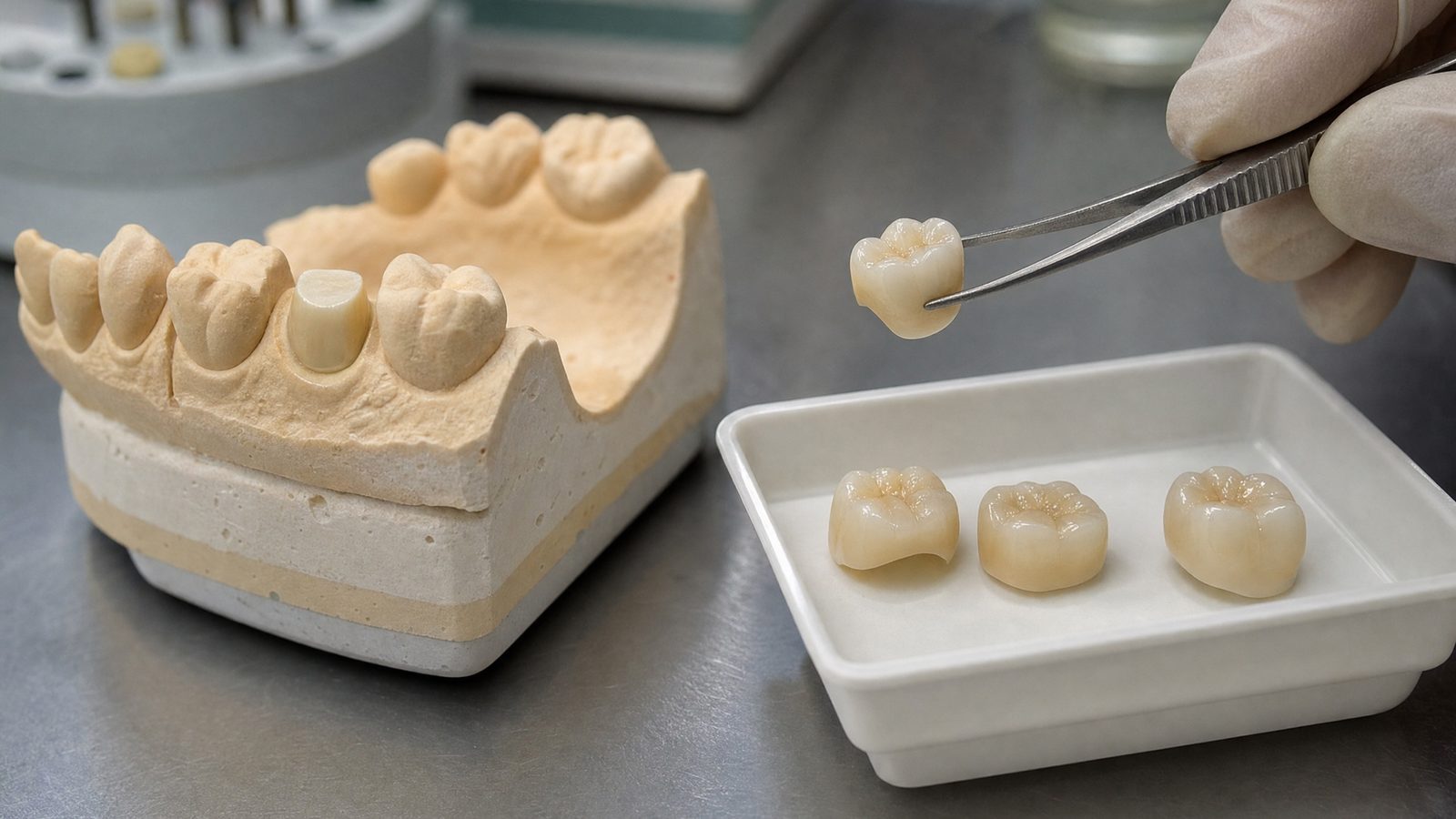
A zirconia crown is a dental crown made from a white, durable ceramic material called zirconium oxide. It comes up for people whose tooth needs to be crowned because of decay, a fracture or a color problem, and who are looking for a metal-free, natural-looking option. It is used for single-tooth crowns, bridges and implant-supported prostheses.
How are zirconia crowns made, and why are they preferred?
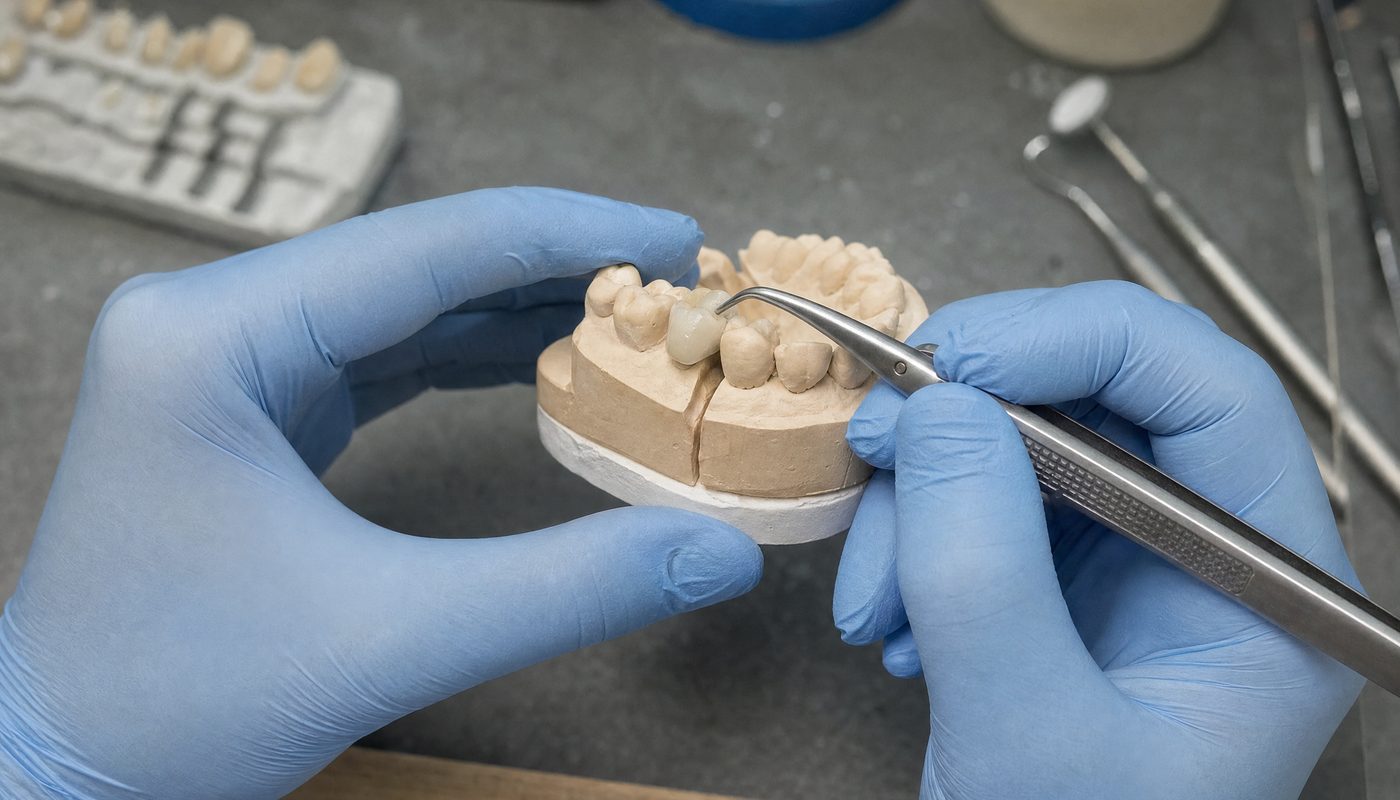
A crown is like a sheath that sits over the prepared tooth and covers it completely. The zirconia framework is designed with computer assistance on a model obtained from a digital scan or impression, and is produced by milling from a block in a milling machine. A porcelain layer can be applied over it for aesthetics, or it can be left as a single-piece (monolithic) zirconia crown.
In porcelain-fused-to-metal crowns, the metal in the framework can create a gray line at the gum margin and reduce light transmission. Because zirconia is white, this problem is not seen; it lets light through to some extent and blends well with the gums. It is also an option for patients with a metal allergy. Because it is highly durable, it can also be used in the back teeth and in bridges.
Who is it suitable for?
- People whose tooth structure has weakened because of a large filling, decay or a fracture
- Teeth that have had root canal treatment and need to be protected
- Patients who want aesthetic correction for a color or shape problem and do not have enough tooth structure for a veneer
- People with a metal allergy or who want a metal-free restoration
- People who want to replace their old porcelain-fused-to-metal crowns
- Patients for whom an implant-supported crown or bridge is planned
In people whose tooth is healthy and has only a mild color problem, whitening or a veneer can give a result with less loss of tooth material than a crown. The physician decides which option is suitable by looking at the amount of remaining tooth structure and the bite.
Treatment process
Examination and planning
The tooth and the surrounding bone are assessed with a panoramic X-ray. Decay, the need for root canal treatment and gum health are checked. The color is chosen together with the patient in relation to the neighboring teeth. Existing X-rays can be reviewed remotely.Preparing the tooth
Under local anesthesia, the tooth is reduced by the thickness the crown will need to sit. Because a crown covers the tooth completely, more tooth structure is removed than with a veneer; this is inherent to a crown.Impression or digital scan
An impression of the prepared tooth is taken, or a three-dimensional image is obtained with an intraoral scanner. A temporary crown is fitted to protect the tooth.Fabrication and try-in
The zirconia framework and, if any, the porcelain layer are made in the laboratory. At the try-in, the fit of the margin, the color and the bite are checked; adjustments are made if needed.Bonding
The crown is bonded to the tooth with a special cement. The bite is checked one last time and excess cement is cleaned away.Zirconia crowns are usually completed in a single trip; a stay of five to ten days is planned depending on the number of teeth. Reviewing the panoramic X-ray and preparing the written plan are done remotely; if root canal treatment or a gum procedure is needed, the time may be longer. The exact duration varies according to the physician's plan.
Healing and what to watch for
After bonding, sensitivity to hot and cold and mild gum tenderness can occur in the first days; these usually decrease within a short time. If the bite feels high, it should be reported to the physician and corrected.
Possible risks include continued sensitivity, cracking or chipping in the porcelain layer, loosening of the crown, the margin becoming visible as the gums recede, and decay developing over time in the tooth under the crown. A night guard is recommended for people who clench their teeth. Daily brushing, dental floss and regular checkups with the physician are the factors that determine the life of the crown.
Comparison of zirconia, E-max and porcelain-fused-to-metal
Porcelain-fused-to-metal is a long-used, durable and relatively economical option; aesthetically it falls behind zirconia. E-max is glass-ceramic based, has high light transmission and gives very natural results in the front teeth; however, it is not as durable as zirconia in long bridges and under high chewing force. Zirconia strikes a balance between durability and aesthetics and can be used in both the front and the back. Which material is chosen is decided together with the physician according to the position of the tooth, the remaining tooth structure, the bite and expectations.
You can get a free initial assessment by sending your panoramic X-ray or your existing medical reports; a specialist physician reviews them and the plan is sent to you in writing. This article is for general information only; the exact diagnosis and treatment plan are determined through an examination by a specialist physician.