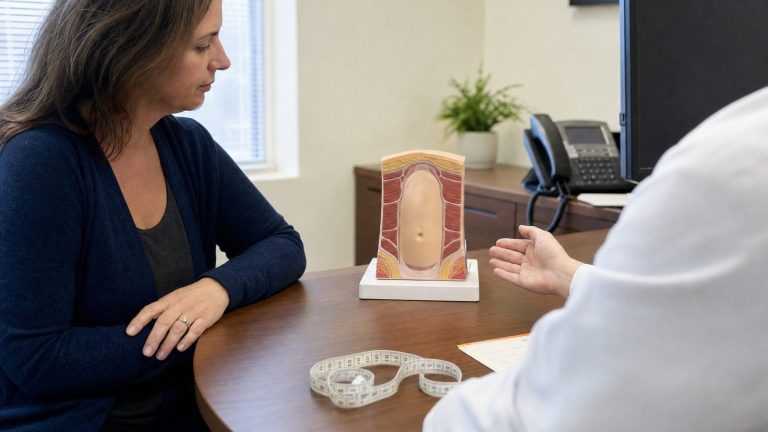



Pregnancy, childbirth and breastfeeding can leave the breasts with lost volume and sagging, and the abdomen with loose skin and separated muscles. A mommy makeover is the name given to combining several operations that address these changes under a single plan. This guide is for people who are bothered by changes in their body after childbirth and want to learn about their options.
What does a mommy makeover include?
There is no single standard package; the content is set for each person. The procedures most often combined are:
- Breast: a breast lift (mastopexy) for sagging, an implant or fat transfer for lost volume, reduction for large breasts; sometimes a lift and an implant together
- Abdomen: a tummy tuck for loose skin and separated muscles, liposuction for localized fat
- Other: waist and hip contouring, arm lift, aesthetic surgery of the genital area after childbirth
Each operation has its own evaluation criteria; planning a mommy makeover therefore means planning each procedure separately.
Who is it suitable for?
- People who have finished giving birth and breastfeeding and have waited the period their physician recommends after breastfeeding ends
- People who have finished their family planning; a new pregnancy can compromise the results, especially in the abdomen
- People whose weight has been stable for at least a few months and who have no major weight-loss goal ahead
- People in good general health who tell the physician about any anemia, thyroid or clotting problem
- Non-smokers, or those who can quit during the period of surgery
- People who can get help with housework and childcare for a few weeks after surgery
Surgery very soon after childbirth is not recommended; time is allowed for the body to return to its former balance, for the breasts to reach their final shape and for weight to settle.
The surgery process
Assessment and plan
A specialist physician reviews your photos and health information. The breasts and abdomen are assessed separately; which procedures are needed, whether they will be done in one session or in stages, and the total surgery time are sent to you in writing.Day of surgery
The operation is performed under general anesthesia. For combined procedures it usually takes several hours. Clot prevention measures, body temperature and fluid balance are closely monitored by the anesthesia team. You usually stay in the hospital for one or two nights.The first days
There is tightness and swelling in both the chest and the abdomen. A sports bra and an abdominal compression garment are worn together. Drains are usually removed in the first days; short walks start from the first day.Checkups and stitches
Dressings are changed regularly, and the stitches are mostly the dissolvable type. Non-dissolvable stitches, if any, are usually removed at around two weeks.Long-term follow-up
It can take up to a year for scars to soften; the breast shape and the abdomen take months to reach their final form. The physician may ask for photos for remote checkups.A stay of 10-14 days is usually planned for a mommy makeover. Drains and first dressings are handled in the first days, the flight is usually planned after the checkup in the second week, and precautions against clots on a long flight are discussed with the physician. The exact duration varies according to the physician’s plan.
Recovery and what to watch for
Recovery after a combined operation is longer and more tiring than after a single operation. Desk work is usually resumed within two to three weeks; for heavy lifting and picking up your child, the physician usually asks you to wait several weeks, sometimes longer. Help at home is essential during this period. The compression garment and sports bra are worn for the period set by the physician.
The risks are the sum of the risks of each operation involved: fluid and blood collection, infection, delayed wound healing, scar problems, a change in nipple sensation, implant-related problems and asymmetry. As the operation gets longer, the likelihood of leg vein clots and anesthesia-related problems also rises; for this reason the physician prefers to split the procedures into two sessions for some patients.
One session or in stages?
A single session means one anesthesia and one recovery period; it is a practical advantage for patients who travel. On the other hand, the operation is longer, the risk of blood loss and clots rises, and recovery is harder. A staged plan splits the procedures into two sessions a few months apart; each session is shorter, and the plan for the second operation can be made after seeing the first result. Which route suits you is decided by looking at the total surgery time, your health, your weight and blood test values, and the support you have available. If there is any doubt about safety, a staged plan is preferred.
You can get a free initial assessment by sending your photos and health information; a specialist physician reviews your photos, the procedures you need and the plan are sent to you in writing, and travel and accommodation are planned accordingly. This article is for general information only; a definitive diagnosis and treatment plan are determined by a specialist physician’s examination.