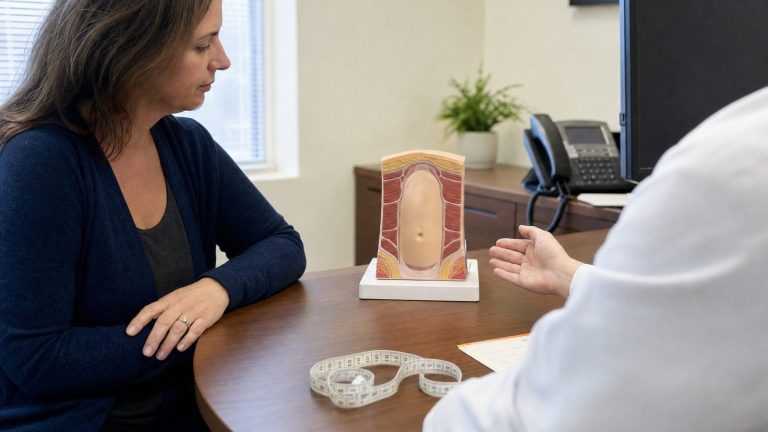


Liposuction is an operation that shapes the body’s contours by drawing out, through thin cannulas, pockets of fat that stay in place despite diet and exercise. Vaser liposuction is a way of performing it in which the fat is first loosened with ultrasound energy before being drawn out. The information below is for people who want to understand the difference between the two methods and find out whether they might be suitable.
What does liposuction do, and what does it not do?
Liposuction is not a weight-loss method. The aim is not to lose weight but to correct contours by reducing the thickness of fat in specific areas. The abdomen, waist, back, hips, inner and outer thighs, arms and under the chin are the most commonly treated areas.
In the classic method, a tumescent fluid containing a local anesthetic and a vasoconstrictor is first injected into the area; the fat is then drawn out with cannulas inserted through small incisions. In the Vaser method, one more step is added between these stages: an ultrasound probe loosens the fat cells in a way that causes less damage to the surrounding tissue, and then the fat is removed at lower pressure.
If the skin is loose, liposuction alone may not be enough; after the fat is removed, sagging can become more noticeable. In that case, operations that remove skin, such as a tummy tuck, are considered.
Who is it suitable for?
- People close to their ideal weight whose weight has been stable for a long time
- People with localized fat deposits that do not go away with diet and exercise
- People with good skin elasticity, whose skin can recover after the fat is removed
- People in good general health, without a bleeding disorder or an uncontrolled chronic disease
- Non-smokers, or those who can quit during the period of surgery
- People who are not planning a pregnancy or a major weight change soon
Liposuction is not a suitable solution for people seeking obesity treatment, whose skin is markedly sagging or whose main problem is fat inside the abdomen (visceral fat); these issues are clarified at the examination.
The surgery process
Assessment and area plan
A specialist physician reviews your photos and health information. Which areas will be treated, skin quality and, if needed, additional procedures such as fat transfer are assessed; the plan is sent to you in writing.Day of surgery
A small area can be done under local anesthesia and sedation; when more than one area is planned, general anesthesia is preferred. The duration varies with the number of areas and is usually between one and three hours. You go home the same day after small procedures and stay one night in the hospital after larger ones.The first days
A pink fluid leaking from the cannula entry points in the first days is normal. The compression garment is put on right away; bruising, swelling and a tenderness similar to muscle soreness are expected. Walking early reduces the risk of clots.Checkups and compression garment period
At the first checkup, the entry points and the swelling are assessed. The compression garment is worn throughout the day for the period set by the physician, usually several weeks. A lymphatic drainage massage is recommended for some patients.A stay of 5-7 days is usually planned for liposuction. The stitches at the entry points are either the dissolvable type or are removed within the first week; the first checkup takes place in the days after surgery and the flight is planned after this checkup. The exact duration varies according to the physician’s plan.
Recovery and what to watch for
Light activities are usually resumed within a few days; for heavy exercise the physician usually asks you to wait several weeks. It takes months for the swelling to go down and the skin to settle into the new contours, so judging the result in the first weeks is misleading. Removed fat cells do not come back, but if weight is gained, the remaining cells grow and the contours change.
Possible risks include a wavy or uneven surface, asymmetry between the two sides, fluid collecting under the skin (seroma), long-lasting numbness, infection and less skin tightening than expected. Rare but serious risks include clots in the leg veins and fat embolism; early movement and the protective measures recommended by the physician reduce these risks. Skin burns caused by ultrasound energy have rarely been reported with Vaser.
Vaser compared with classic liposuction
Because Vaser loosens the fat first, it makes things easier for the surgeon in fibrous tissue such as the back and the male breast area, and in fine sculpting work where muscle lines are made more defined. Expectations of less bruising and a smoother surface are also often voiced; however, whether there is a clear difference for the patient is debated, and the main factors that determine the result are the surgeon’s experience and patient selection. The classic method remains a reliable option in areas of large-volume, soft fat. Because Vaser requires an additional step, the procedure may take somewhat longer. Which technique is used is decided together by the area, the tissue structure and the method the physician is accustomed to.
You can get a free initial assessment by sending your photos and health information; a specialist physician reviews the areas from the photos and the plan is sent to you in writing. This article is for general information only; a definitive diagnosis and treatment plan are determined by a specialist physician’s examination.